

Predictions for 2026
6 best guesses at what might happen in 2026 work, marketing, and AI

Hi there! You’re reading the Bonfire newsletter from Kevan Lee & Shannon Deep. Each week, we highlight brand, marketing, and creative learnings from our experience as in-house marketers turned agency owners who think a lot about creativity, our relationship to work, and how all of that impacts our identities. We’ll also feature insights from our digital community of super smart folks (which you’re welcome to join).
Wishing you a great week!
–
6 predictions for our 2026 work
For the past several years, I have tried in vain to predict upcoming trends, strategies, stories, and channels that will matter in the new year. Most of my predictions are wrong. No need to search the archives to see what social network I predicted would be the next big thing in 2021. (Spoiler: I failed to predict TikTok.) 🤦♂️
Even though I get the details wrong, I still find predictions to be a fun exercise in imagination, trendspotting, and—dare I say—hope. To wit, you will not see me predict the downfall of civilization in 2026, despite the evidence. My predictions are mostly rose-colored, somewhat marketing-related, and proudly hit-or-miss.
Here’s a look at how the 2025 predictions panned out:

Predictions that were mostly right:
TikTok will not be banned in the US
Normal “googling” will decline 10% or more
Employee advocacy will be the #1 new marketing channel
Predictions that were mostly wrong:
Threads will be the new Twitter (for reals this year)
Mixed:
Every marketing job description will ask you to exhibit strong AI literacy. (Turns out, many marketing jobs were fully replaced by AI.)
You will be asked to run a campaign for a Gen Alpha customer / buyer. (I personally was not asked to do this, but I’m sure it happened to others.)
The best-performing content will be human-outlined, AI-written, and human-edited. (No doubt lots of this content was created in 2025, and lots of it performed well. I’d like to think that some fully-human content also did well … but I can’t always tell what’s human and what’s not anymore.)
6 bold-ish predictions for 2026
1. AI will be used less at work
By some estimates, employees who use AI at work are saving up to 5 hours per week.(How are these reclaimed 5 hours being used? On more work, of course!)
Data like this would lead you to believe that AI is working, that we’ve figured it out.
But then you read reports like this from MIT: 95 percent of AI-at-work initiatives fail.
Yikes.
Certainly, in 2026 AI will keep advancing at breakneck speed, and we’ll continue to be amazed and revolted at what AI can create for us. But when it comes to the expectation of AI’s work productivity facelift, businesses are going to pump the brakes. They’re going to see how often their AI projects fail. They’re going to see how discouraged their workforce is becoming. And they’re going to pull back demonstrably on the use of generative AI platforms.
2. Bootstrapped startups will outpace VC-backed startups
In 2026, more people will choose to build a bootstrapped startup than will choose to go the VC route.
It’s never been easier to build your own software product before, or at least to build one that can get you some early traction and enough of a foundation-—revenue, users, usage, etc.—to not need any outside investment.
Plus, the attitudes about VC investment seem to be shifting. Younger generations are more attuned to the downsides of “doing it for the shareholders,” largely because we are living with the fallout of VC-backed, growth-at-all-costs behemoth companies today. There’s an entirely different vibe with a bootstrapped business. We’ve been fortunate to have several bootstrapped companies choose to work with us at Bonfire, and we wish the world were full of these folks. From our lips to God’s ears, in 2026.
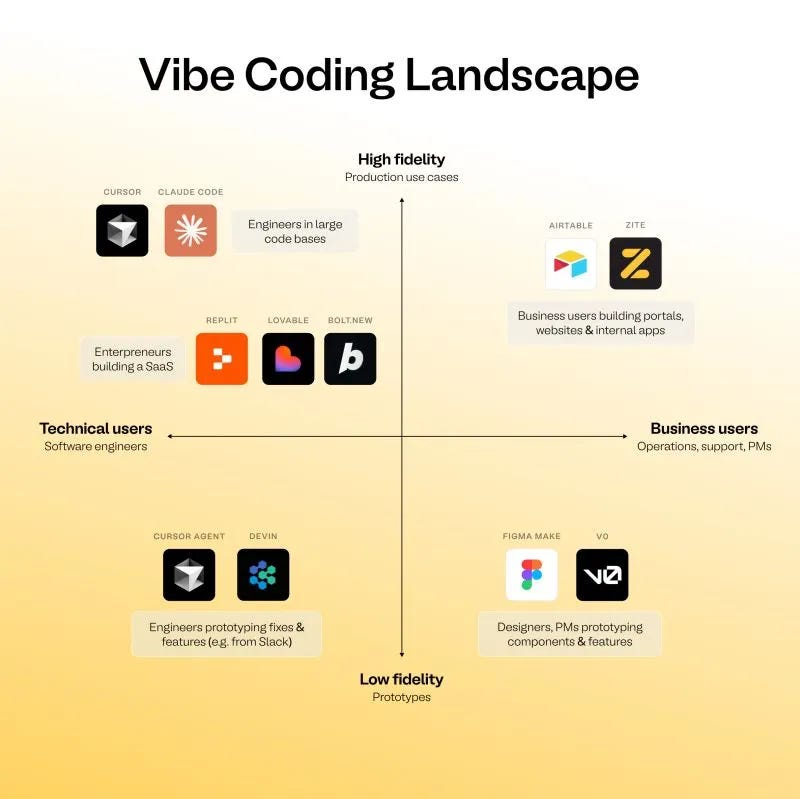
3. Every marketing team will have a vibe coder
Vibe coding uses prompts to guide an AI in generating, refining, and debugging code, so that you don’t have to.
Vibe coding allows non-developers and non-technical folks to build all sorts of interesting apps, tools, websites, and more.
For years, this was a huge blocker on the marketing teams I led. We had big, weird ideas. We couldn’t code them! The previous solution was to hire a dedicated marketing developer to solely work on marketing engineering projects. But in 2026? You can just let anyone on your team with a vibe-coding interest lean into building you all sorts of cool stuff.
(BTW, if you want this vibe coding specialist to be you, here are some of the best vibe code tools out there: Cursor, Lovable, Base44. Or check out this list from Fillout.)
4. Every marketing strategy will have an in-person component (and not just events)
Consumers deal with so much AI slop these days; one of the best ways to combat this is to take things out of the digital realm and bring them IRL.
Events have been back on the marketing menu for a couple years now. In 2026, this is going to ramp up even more to include all sorts of in-person gatherings. Here is a shortlist of possibilities:
Meetups
Dinners
Summits
Pop-ups
Workshops
5. Nostalgia will take over our campaigns
In 2026, nostalgia will become the go-to creative lever across marketing campaigns as more and more consumers long for The Good Ol’ Days. We’ll see a full aesthetic swing back to analog Y2K and early 2010s: pixel fonts, skeuomorphic design, grainy textures, interfaces that feel delightfully analog. It’ll be a cure for homogenized Big Tech blandness and a way for brands to stand out and stand apart.
You may notice it in the designs, and you may notice it across the mediums that marketing teams choose:
Zines
Direct mail
Swag and gifting
6. Creative Directors will become Chief Storytelling Officers
Storytelling has been a buzzword for several years now, but you might have noticed it gaining steam in the AI era because so much of our content has become cliche. The companies that stand out are the companies that have a cohesive, clear, differentiated story.
And in 2026, brands will elevate a C-suite role to someone who can keep that story straight.
Today, that role probably falls to a Creative Director or to a CMO (or a really marketing savvy CEO/founder). CMOs have enough else to do and are already at the C-suite table. But Creative Directors tend to be pigeonholed into design-specific arenas, which are story-driven in nature but not often holistic enough. If businesses really want to embrace story, they need storytellers who can influence design identity, verbal identity, and even business strategy. It’s 2026; it’s time for storytellers to be part of the executive Slacks and Zooms.
What are your 2026 predictions?
We’d love to hear them! Drop us a comment, or hit reply to this email.
Come join us in Campout 🏕️
Join Campout’s 3-month challenge to find your values, your vision, and your people for 2026.
Tired of resolutions that fizzle by February?
Start 2026 with intention.
Join us for our 3-month challenge, Start With Intention, beginning January 15.
You’ll get:
3 live workshops (Jan–Mar) + anytime replays
A private channel to connect and keep momentum
Async prompts + resources for deeper reflection
Full access to Campout’s community, library, and tools throughout the challenge
Full details are available in Campout. We’d love to see you there!
But wait! There’s more…
Wanna hang out in person?
New retreat dates are up! Head to our experiences page to join our next one in April 2026.
Wanna be friends?
If you love this newsletter and wish it were more interactive, you’re in luck! Join us over in Campout, our digital community for creative marketers and the creative curious.
Wanna work with us?
If you need help with brand strategy and storytelling, fractional brand and marketing leadership, and bringing your brand strategy to life in impactful ways, send us an email at hello@aroundthebonfire.com to get in touch.
As always, you can find us on LinkedIn, Instagram, and Threads.
Included this piece in this week's digest :) https://allisonstadd.substack.com/p/the-offbeat-126-lead-sheet-leadership