The hidden cost of only choosing short-term wins
How to navigate a major tension of in-house creative work

Hi there! You’re reading the Bonfire newsletter from Kevan Lee & Shannon Deep. Each week, we highlight brand, marketing, and creative learnings from our experience as in-house marketers turned agency owners who think a lot about creativity, our relationship to work, and how all of that impacts our identities. We’ll also feature insights from our digital community of super smart folks (which you’re welcome to join).
Wishing you a great week!

When everything is urgent, nothing is strategic
In a past startup job, when VC money was tight and hyper-growth was mandatory (isn’t that all startup jobs?), I received a homework assignment from the C-suite in which I was asked to label all my team expenses and my teammates as providing short-term impact or long-term impact.
This exercise might have merit in a utopian business setting, where capitalism doesn’t crush a thoughtful timeline and where marketing teams are lauded for balancing their resources. But in the VC business setting? In this economy? The homework was a test, and I was doomed to fail.
Turns out—and maybe you saw this coming a mile away—the resources and colleagues I labeled as long-term impact were deemed expendable. The short-term ones got to stay. As the ruse dawned on me mid-homework assignment, I did my best to creatively label as many items as I could as “short-term” and to advocate to the CFO for our marketing mix to include something, anything, long-term.
Alas, my team and I were once again waylaid by short-term versus long-term thinking.
Why short-term versus long-term is such a fraught topic, especially for marketing and creative work
The situation I described above may be familiar to a lot of you, even if the exact homework assignment differs. Short-term vs. long-term framing shows up everywhere because it maps cleanly to how human brains and modern businesses are wired.
A few forces collide here:
Human psychology favors immediacy. We overweight near-term rewards and undervalue delayed ones. A win this quarter feels real. A payoff in eighteen months feels hypothetical.
Business systems reinforce the bias. Quarterly planning, monthly reporting, and weekly dashboards all reward what moves now, not what compounds later. Never have I ever been given a five-year OKR. If only!
Risk concentrates downward. Executives can afford to take long-term bets rhetorically, but the risk of missing near-term targets usually lands on middle managers and ICs first. It’s rather icky to acknowledge this is how the machine works, but spend long enough as a cog (especially a marketing cog) and you quickly realize how blame rolls downhill.
Marketing and creative work sit at the worst possible intersection of these forces. We operate across time horizons by default. Growth and performance channels are immediate and legible. Brand, narrative, trust, and differentiation are slow, diffuse, and indirect.
One of my beliefs as a marketing leader is that marketing’s job is to see five years into the future and to ensure the company gets there safe and sound. This is lonely work. You’re often the only one looking that far ahead. It’s also hazardous work because everyone else’s incentives and mindsets are focused not on the next five years but on the next five months.
Depending on how you slice it, as much as 70 percent of the work that you do on the marketing side is intended for long-term results.
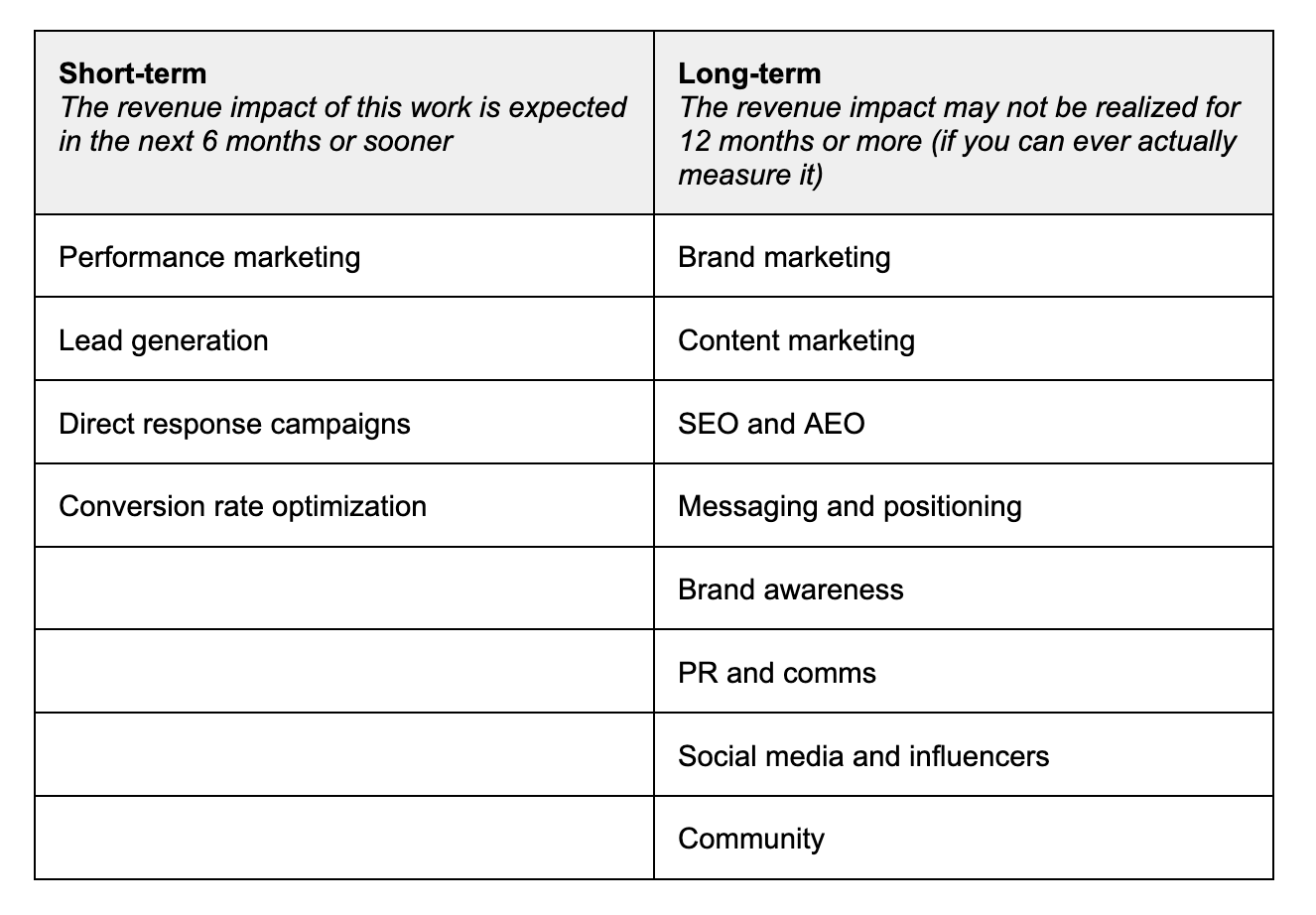
This table is how marketing work is often discussed internally. It’s also where a lot of short-term versus long-term conversations start.
You could say the same thing for how we go about our individual jobs within a team or even working for ourselves.
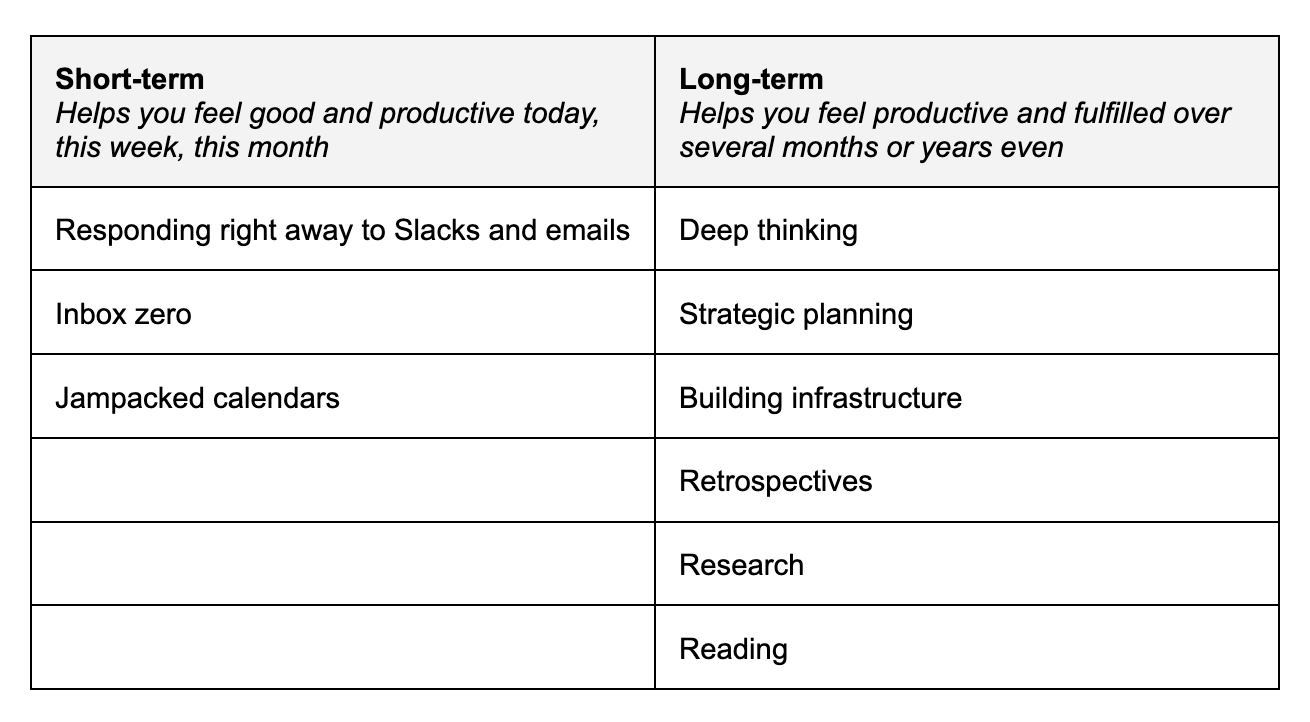
If you only do what’s urgent, you never create the conditions for what’s important. But if you only do deep work and strategy, you risk becoming disconnected from reality. The tension isn’t avoidable. It’s structural.
What to do about it
Turns out: Both tables are wrong.
The reality is that there is no short-term without the long-term, and vice versa. It’s a false choice. Most meaningful work lives somewhere in the middle, and the two extremes depend on one another. If you’re purely focused on the short-term, then I’m afraid to tell you, there isn’t going to be a long-term for you because you’ve spent too long in catchup mode and missed where the market was headed—or you ground yourself to dust by hustling every minute of every day to beat a monthly moving goalpost. And if you only focus on the long-term, then you may not survive through the lean times of not shipping enough and not growing enough.
The two tables above that show the breakdown of short-term versus long-term are wrong. Reality is more like this:
Performance marketing requires both
Effective ads today because of brand and messaging developed over time
Lead generation requires both
Greater lead volume due to brand trust and awareness built across months and years
PR and comms requires both
More relationships to build as short-term payoffs yield results, contacts, and stories to tell
Social media requires both
Immediate boost to awareness and engagement and attention, while building brand loyalty over time
But C-suite ain’t got time for reality.
Which is how we end up in short-term versus long-term debates, constantly.
The problem is not that short-term wins are bad. It’s not that long-term investment is always right. It’s that we often frame them as enemies rather than complements. What this rivalry obscures is a deeper truth: short-term actions shape long-term outcomes, and long-term vision must anchor short-term choices.
Fortunately, there are some tips and tricks that you can try if you’re finding yourself stuck in this endless loop. Here’s what we’ve tried before and what’s worked for us.
How to navigate the short-term
Break long-term projects into short-term milestones (with impact).
Instead of:
Create updated messaging and positioning
Use:
Complete 25 customer interviews to inform Voice of Customer guidance to be used by CS and Sales teams
Deliver new suite of ad copy to test-and-learn about new CTAs and messaging in order to drive higher clickthrough
All the milestones can still build toward your ultimate goal, but you can also show how the steps along the way can drive short-term results across the business.
Measure your incremental progress toward a long-term goal.
Talk the language of short-term focus
It may be that your long-term initiatives are already having short-term impact. You’re just using different words than the rest of the executive team. Here’s an example of a way to talk about long-term impact using short-term language and laddering goals:
One of the things that a lot of leadership teams care about right now is efficiency.
So if I want to keep brand impact top-of-mind at the company level and among my leadership team, I need to connect the dots from brand investment to efficiency. Okay! I can do that! Instead of talking about metrics like brand reach or aided recall, I need to start talking about how brand investment can shorten the sales cycle, can increase velocity of a funnel, can decrease cost-per-lead from Direct Response spend.
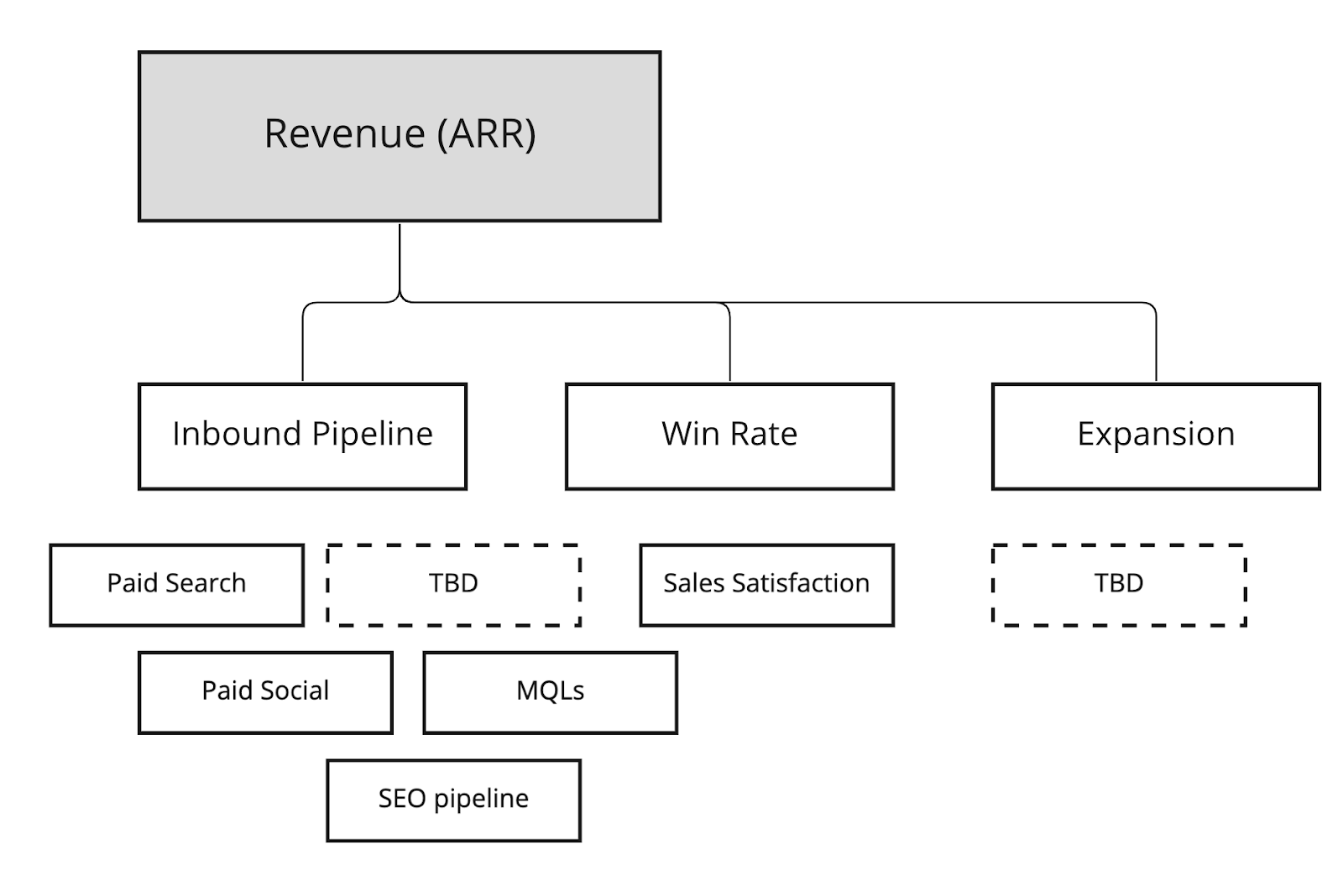
Bonus tip (warning: may make you nervous): Ship stuff before it’s perfect.
Sometimes, the C-suite’s fear about long-term resources is that there is nothing literally visible (aka market-facing, aka something you can show off in Slack) about this work. If your long-term tendencies prevent you from sharing until everything is pixel perfect, it might behoove you to get out of stealth mode earlier than you think.
How to advocate for long-term
Attach long-term resourcing to your short-term confidence
We all know that long-term work impacts short-term results, so if a short-term resource is on the line, it can be useful to articulate the degree to which your hands will be tied without it.
My favorite way is to use confidence intervals:
The way I’ve phrased this in the past is simply: “If brand spend is reduced by $1M, then I have 50% confidence that I’ll be able to hit my goals next year.” (It probably goes without saying how important it is to align with your executive team on what marketing’s goals are first.)
Build long-term into a mathematical mix
If you can be consistent with the ratios for how you invest your time and energy, then it can make long-term emphasis an easier thing to justify. For instance, if you were to dedicate 60 percent of your time to short-term work and 40 percent to long-term, you’ve given yourself permission to do both (the exact numbers don’t matter so much as having a mental model).
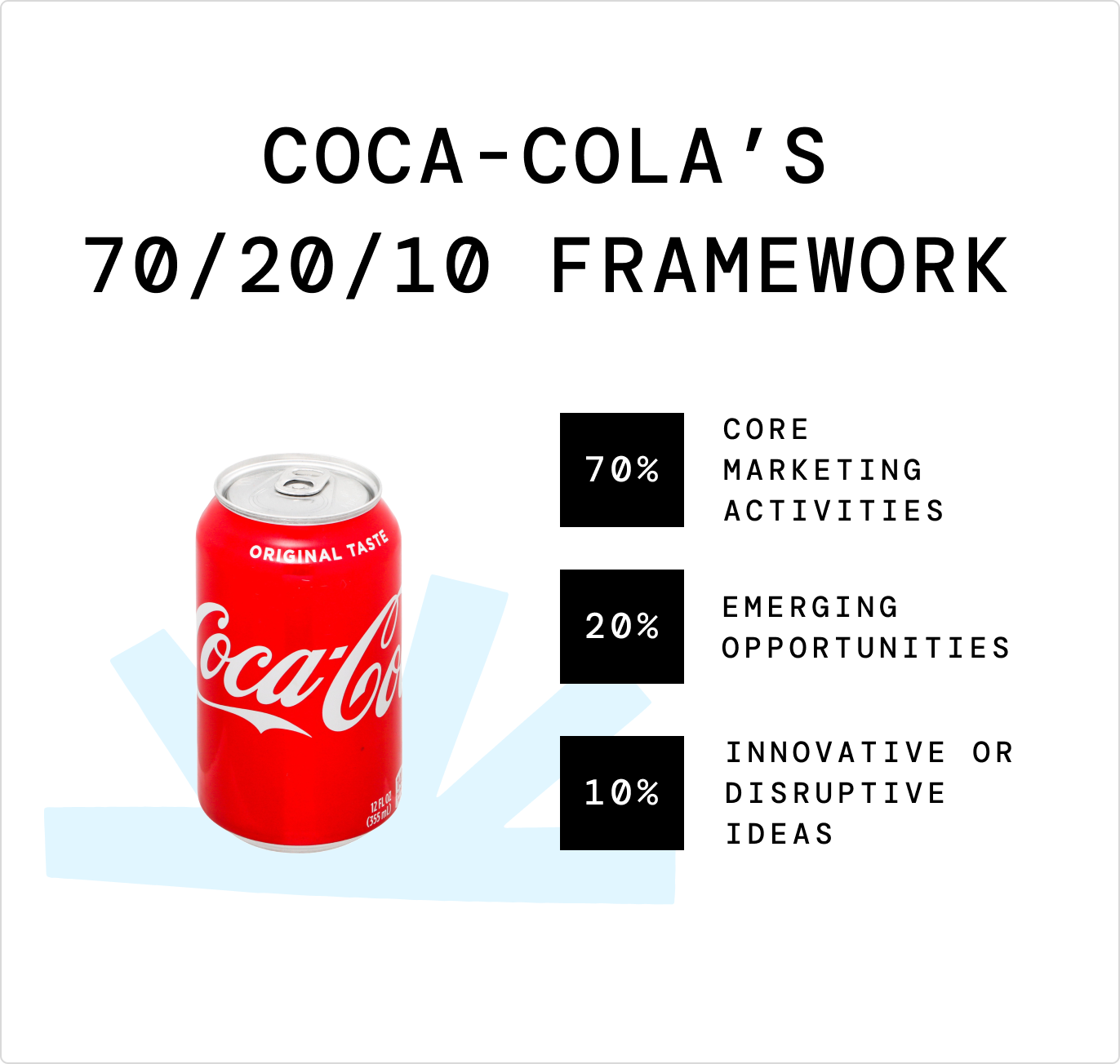
One of my favorite ratios is Coca Cola’s 70-20-10:
Find comps in the market that you can point to (and that your C-suite will love)
Also: C-suite loves examples of themselves! If you can pull examples from the company’s past where long-term investments paid dividends, you can make a really compelling case to preserve some long-term plays.
We’d love to hear from you. What do you think?
Has this short-term vs. long-term stuff happened to you before? How do you navigate it? We’d love to know what it’s been like for you.
Join us in Campout
In Campout, our digital community, we talk about stuff like this on the daily in our channels and a couple times a month in our live events. All supported by exercises and templates to help you craft a career with purpose and intention.

But wait! There’s more…
Wanna hang out in person?
New retreat dates are up! Head to our experiences page to join our next one in April 2026.
Wanna work with us?
If you need help with brand strategy and storytelling, fractional brand and marketing leadership, and bringing your brand strategy to life in impactful ways, send us an email at hello@aroundthebonfire.com to get in touch.
As always, you can find us on LinkedIn, Instagram, and Threads.