

The shadow side of leadership
The same qualities that make us effective can also quietly undermine the people around us

Hi there! You’re reading the Bonfire newsletter from Kevan Lee & Shannon Deep. Each week, we highlight learnings from our experience as in-house marketers turned agency owners who think a lot about creativity, our relationship to work, and how all of that impacts our identities. We’ll also feature insights from our digital community of super smart folks (which you’re welcome to join).
Wishing you a great week!

The uncomfortable truth about leadership
During my days as a startup marketer, I was guilty of self-appointed omniscience at work. I thought I knew what was best. I had the privilege of working for some really wonderful CEOs who taught me so much about business and marketing and leadership, and I guess I built a rather strong filter for what I perceived as good CEO behavior and what I saw as toxic CEO behavior, the type that tanked morale and performance.
Leaving the roost of in-house work, I resolved to only ever do the good CEO behavior.
And I have failed, more times than I would have liked and in more ways than I could have imagined.
Turns out, leadership is hard! Co-running a business ain’t easy. And while I would have hoped to avoid any of my toxic traits bubbling to the surface—especially the traits that are reminiscent of the exact ones I sought to leave behind in Startup World—here they are. Back again.
I have secret plans and agendas known only to me, and I hope that others are able to figure them out.
I fail to give clear feedback when necessary and instead just re-do things myself.
I do not let others help me, which erodes trust and togetherness.
But lately I’ve been trying to take these “misses” of mine and reframe them into something positive. And I’d love to share with you some of the tools I’m using to think differently about the habits and behaviors I’m noticing.
In our Campout community, we began the year with events and programming about values, which included sessions on the light and shadow of the traits we are drawn towards. For example, if I value autonomy, I may excel at independence (light) and also push people away to preserve my autonomy (shadow).
And so I wondered: Might these toxic leadership traits work the same way? If the toxic traits are the shadow, then where is the light?
6 of the most common toxic CEO traits
I’ve been in many leadership rooms, both physical and Zoom, and have seen all sorts of different leadership traits gone awry. They often start from a place of well-meaning, but they spiral in a way that can be demoralizing, destabilizing, or just plain ineffective for the team. I call them toxic CEO traits, but really any leader can exhibit them and startup leadership in particular seems to be a grow lamp for these traits in particular.
Do any of these sound familiar to you?
1. I do not trust the people around me as much as I could.
This one rarely shows up as outright distrust. It shows up as double-checking everything, sitting in on meetings you don’t need to attend, rewriting work that was already good enough. Sometimes it even shows up as building systems and dashboards to “make things transparent,” when what you really want is control. Oof.
The root of this trait is usually care, which can tip into excellence or perfectionism. You want things to be good. You want the company to succeed. You feel responsible.
But you’ve probably seen where this trait leads: Over time, a lack of trust becomes visible, people stop taking ownership, everyone waits for approval, and nothing gets done.
A good test: When something goes wrong, is your first instinct to ask what happened, or to ask who touched it?
2. I change my mind too often.
There is a version of this trait that looks like adaptability. Markets change, and context changes. Strategy should change, too.
But there is another version that feels very different on the receiving end. You’ve probably felt this before: Priorities shift every week. Projects start and stop. Teams learn not to fully commit because they are quietly betting that this direction won’t last either. Momentum dies not because people are lazy, but because they are gun-shy about completing something, anything, since it may need rebuilding at any point.
Most leaders who struggle with this are idea-driven and see possibilities everywhere, which is an extremely positive and useful perspective as a leader.
A good test: How many active and simultaneous projects right now were once “the top priority”?
3. I wait too long to make hard decisions.
You tell yourself you are giving someone more time or waiting for more data. And sometimes that is exactly what you are doing. But sometimes you already know the answer and just don’t want to be the person who says it out loud.
The cost of waiting is rarely obvious in the moment. But it accumulates quietly in morale, clarity, and focus, especially in a fast-moving world like business. There are times when the “light” side of this trait—carefulness, consideration, preparedness—can save you from problems, but the shadow side of indecision can prove costly.
A good test: Are you looking forward to the result of the decision but not the making of the decision?
4. I rely too much on my own instincts.
Instinct is pattern recognition built from experience, which can be a great thing! Many companies would not exist without someone trusting a gut feeling that didn’t yet have data behind it.
But instinct can crowd out other voices, especially those less senior (and when you’re running your own business, everyone is less senior). It can make disagreement and productive debate feel unnecessary. If we’re just going to go with the CEO’s gut, then what difference does it make to speak up?
A good test: When was the last time someone changed your mind?
5. I confuse activity with progress.
Overworked marketers may recognize this one immediately (and feel it viscerally!). Celebrating busy-ness can easily become a substitute for celebrating progress. We love talking about being process proud and outcome agnostic, but to confuse activity with progress is to put hustling on a pedestal, free from direction, strategy, or purpose.
Effort and progress are not the same thing.
Sometimes the hardest, most valuable work is slow, uncertain, and uncomfortable. It does not produce a visible artifact every day, and it cannot be optimized into neat weekly updates.
A good test: If you paused everything for a week, which activities would actually matter?
6. I hold on too tightly to things that should change.
In the writing world, you may have heard the phrase “kill your darlings,” which means you shouldn’t get too attached to your favorites turns of phrase if they don’t serve the broader purpose of your piece. Same can be true with leadership. We leaders feel beholden to products we built, strategies we championed, or hires we believed in. Letting go of these things can feel like admitting failure. So instead, we rationalize ways to give it more time.
But leadership often means letting go earlier than feels comfortable.
A good test: Is there something you are defending mostly because it was once your idea?
Which trait might you have? Here’s a small test.
If you want to know which of the above traits might be yours, think about the last decision that you made.
What was your main source of stress or difficulty?
Did you want more certainty?
Did you hesitate to disappoint someone?
Did you keep revisiting the decision instead of committing?
Did you trust your own view more than anyone else’s?
This should give you a clue into what might be happening in your habits and behaviors.
The good news? It can all be reframed. Here’s how.
As you may have noticed, every one of these six traits is just the shadow of a strength.
Caring deeply can turn into overcontrol.
Curiosity can turn into constant change.
Empathy can turn into avoidance.
Confidence can turn into certainty.
Energy can turn into busy-ness.
Conviction can turn into stubbornness.
The work is not to eliminate the strength. It is to keep it from running unchecked.
The useful shift for me has been to stop thinking of these traits as things to eliminate and start thinking of them as things to steer. If the shadow exists because a strength exists, then my goal shouldn’t be to erase the instinct. My goal should be to build guardrails around it. If you know you tend to overcontrol, you can intentionally give ownership away. If you know you chase new ideas, you can build systems that protect focus. If you know you hesitate on difficult decisions, you can create moments where the decision must be made.
This is where good teams help, too (and good co-founders). Leadership gets dangerous when no one can reflect your behavior back to you. The leaders I respect the most are the ones who make it safe for their team to say, gently but honestly, “Hey, this might be one of those moments.” It maybe only happened once or twice across my career where someone on my team gave me feedback like this (it’s a big, scary thing to give your boss or your boss’s boss feedback). But boy was it eye opening!
Over to you
The presence of a toxic trait isn’t really the problem. The problem is when it operates invisibly. Once you can see it and name it, it loses a lot of its power. And if leadership is anything, it’s a long process of noticing your own patterns, adjusting them slightly, and trying again the next week.
What leadership traits have you noticed among the leaders you love? What are you working on for yourself these days? We’d love to hear from you!
Upcoming events
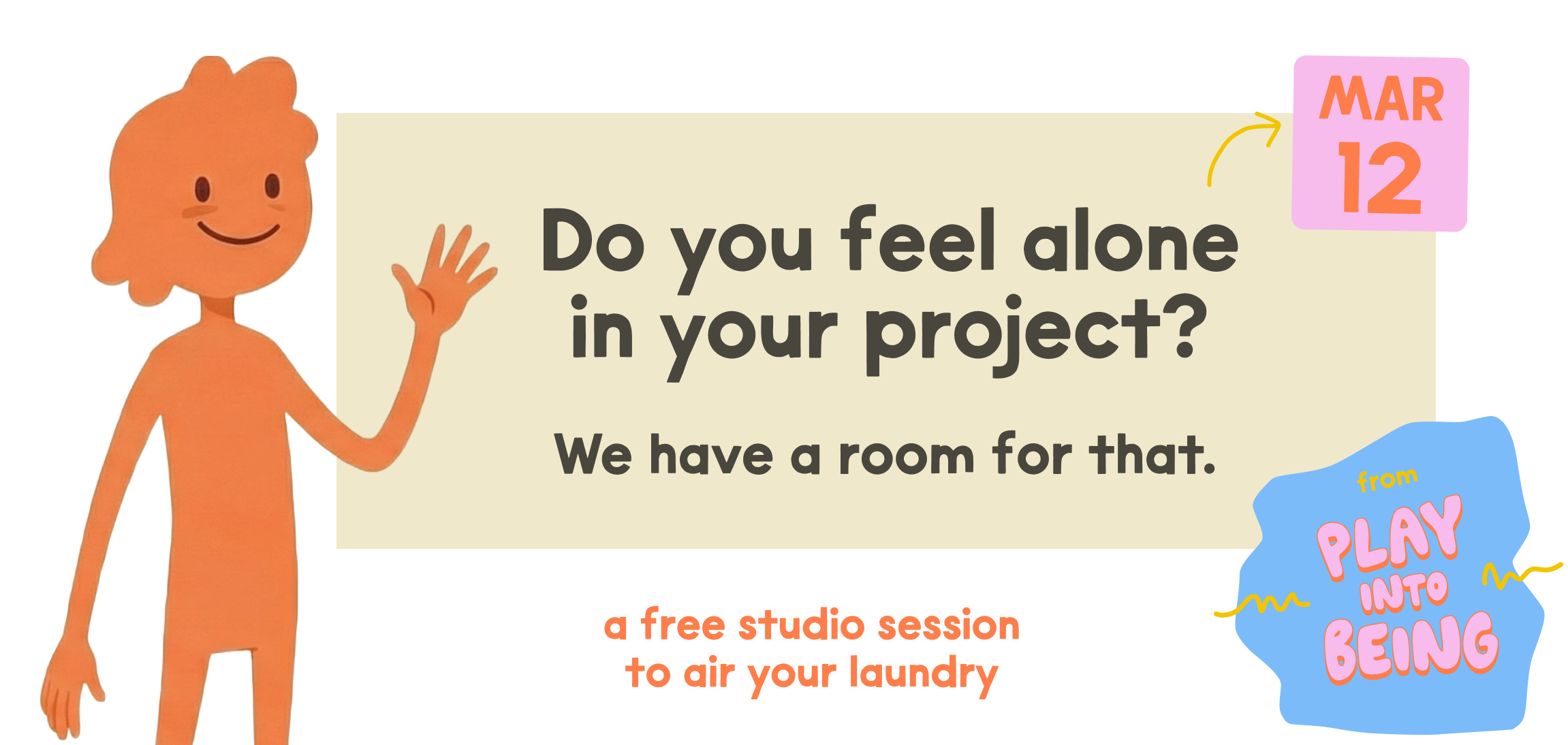
Join our amazing Campout community lead Kristen Pavle for a free event this week, Thursday, March 12, all about nurturing and supporting your creative projects. Bring something you’re working on to workshop it as a group!
The session is a sample of what Kristen will be doing on a weekly basis as part of her upcoming Residency program, a 6-week virtual studio that kicks off March 26. Come get a feel for what the full residency experience will be like, have your project reflected, and leave with clarity. You can check out the full Residency program if you’re curious to learn more.
But wait! There’s more…
Wanna hang out in person?
Head to our experiences page to join our next retreat in April 2026. Only one spot remaining!
Wanna work with us?
If you need help with brand strategy and storytelling, fractional brand and marketing leadership, and bringing your brand strategy to life in impactful ways, send us an email at hello@aroundthebonfire.com to get in touch.
As always, you can find us on LinkedIn, Instagram, and Threads.
Ooff this hits home in so many ways. I think people who gravitate to startups and growth-stage businesses (ME) are particularly familiar with the "busy=productive" trap. It's bad enough when you're an individual contributor, but super unhealthy when you're responsible for a team.
A reading rec to explore more about shadows, if you're interested.... Shirzad Chamine's Positive Intelligence. He writes about the ten "mental Saboteurs" and how to manage each one.