Hi there! You’re reading the Bonfire newsletter from Kevan Lee & Shannon Deep. Each week, we highlight brand, marketing, and creative learnings from our experience as in-house marketers turned agency owners who think a lot about creativity, our relationship to work, and how all of that impacts our identities. We’ll also feature insights from our digital community of super smart folks (which you’re welcome to join).
Wishing you a great week!

Content warning: Mentions of mental health issues, disordered eating, and suicide.
The dreaded interview question: “What’s your greatest weakness?”
And the usual answer: “Oh, you know…I would say that I’m a bit of a perfectionist!”
😑 🙄
Mmhm. Ok.
Now, do I think this is a bullshit interview question? Yes. It seems like interviews nowadays are more about seeing if you know how to interview than they are about any legitimate evaluation of your suitability for a certain job. But do I think that answering a question about a character flaw with perfectionism is revealing of the problematic way we think about perfectionism in general? Also yes!
Broadly speaking, we’re quite forgiving with perfectionism, tending to see the people who embody this trait as dedicated, hardworking, detail-oriented, and conscientious. We bandy it about as a humble-brag, a virtue gone just slightly awry.
Who wouldn’t want to strive for perfection? Like, duh.
Except, in our productivity-and-progress-obsessed culture, where nuance is considered inefficient, and all-or-nothing thinking is seen as a marker of conviction, we forget that perfection does not exist.
And there are serious costs to striving for the impossible.
Perfectionism is not the virtue we keep pretending it is
If you have a subscription to the New Yorker, I highly suggest Leslie Jamison’s article, “The Pain of Perfectionism,” from earlier this year. In it, she talks about research from psychologists Gordon Flett and Paul Hewitt, who have studied the topic for decades and have come to a stark conclusion:
Perfectionism is not excellence—it’s a self-sabotaging, stress-inducing trait linked to real psychological, physical, and social harm.
What we colloquially call “perfectionism,” they’ve elaborated into a 3-pronged model that adds a lot more depth:
Self-oriented perfectionism: The belief is “I must be perfect.” Unrealistic internal pressure, chronic self-evaluation, persistent fear of mistakes.
Other-oriented perfectionism: “Others should be perfect.” High expectations of colleagues, partners, employees; increased conflict and relational breakdown.
Socially prescribed perfectionism: “Others expect me to be perfect.” The most toxic dimension—linked to anxiety disorders, depression, suicidality.
The impacts of perfectionism they’ve identified are quite severe, so why do we tend to think of it more lightly, just as a trait of our most annoying bosses or the frustrating part of ourselves that always wants more information before starting a project? I think it’s because we’ve normalized and even glorified the outward expressions of perfectionism for so long, and it’s a lot harder to perceive someone’s inner belief system and appreciate all the various behaviors that may stem from the same poisoned root. Meaning: Someone’s persnicketiness about over-preparing for a presentation may be classified “perfectionism,” and the results of that perfectionism even celebrated. But that same person’s tendency to cut people out of their lives, their chronic depression, or their eating disorder are all seen as unrelated issues.
Beliefs are our filters, and all of our thoughts, feelings, and behaviors running through these filters. Boiling down perfectionism to the beliefs of “I must be perfect,” “Others should be perfect,” and “Others expect me to be perfect,” reveal exactly how pervasive and toxic perfectionism can be.
Self-oriented perfectionism has strong correlations to chronic anxiety, depression, and eating disorders. Those with self-oriented or socially prescribed perfectionism may also avoid “stretch projects,” mask procrastination as high standards, and have a hard time finishing work. Other-oriented perfectionism often shows up as criticism, impatience, and impossible expectations of those around you, leading to isolation. And overall, research links perfectionistic tendencies to, increased stress reactivity, sleep disturbances, higher rates of rumination and cortisol elevation.
It’s a short walk to seeing how all these beliefs can lead to isolation and shame.
Why we keep glorifying perfectionism anyway
Productivity culture, the myth of meritocracy, and Western capitalistic values keep our worship of perfection alive and well, despite the human costs.
As mentioned, perfectionism often masquerades as diligence or discipline, so high achievers are rewarded for “flawless” output even if the process is unhealthy. How many hustle-and-grind stories do you read on LinkedIn every week where someone is overblowing touting their triumphs after a frankly horrific-sounding period in which they sacrificed their sleep, peace, leisure time, hobbies, and sometimes their health to achieve some project or business outcome?
The concept of the “ideal worker” also comes into play here. Whether they admit it or not, companies want to hire people with unlimited availability, unfaltering loyalty, and as few competing priorities as possible. We all intuit this, and we act accordingly—and then, when we wise up to this bullshit, we must still pretend accordingly, or risk losing our livelihoods.
Additionally, we live in an increasingly surveillance-oriented culture. Not only does social media encourage us all to present an aesthetic of flawlessness, but it also becomes the permanent record of any mistake, real or perceived. We all operate under the “threat” of anything we do or say being captured and broadcast to a potentially infinite audience. And this internalized pressure becomes a self-reinforcing loop, whether or not our fears ever come to pass.
In these conditions, perfectionism becomes protection. And we fail to notice how it’s eroding us from the inside.
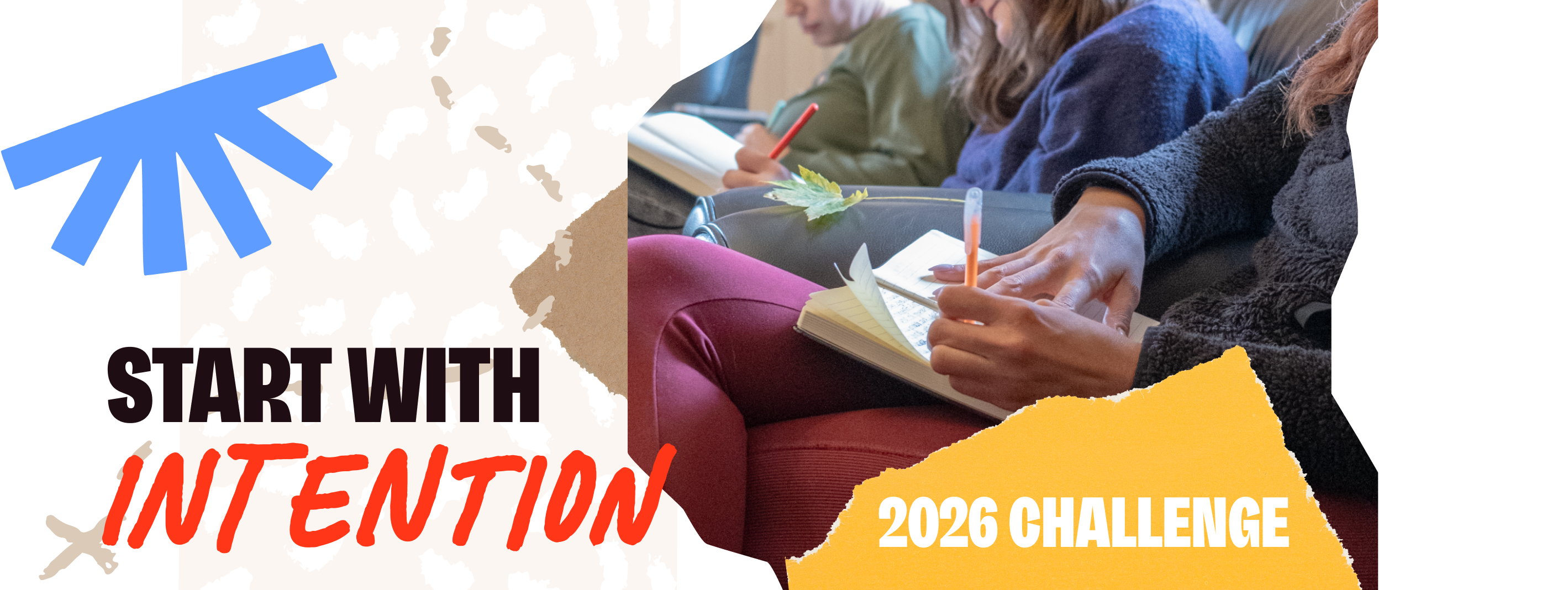
Join Campout’s 3-month challenge to find your values, your vision, and your people for 2026.
You’ll get:
3 live workshops (Jan–Mar) + anytime replays
A private channel to connect and keep momentum
Async prompts + resources for deeper reflection
Full access to Campout’s community, library, and tools throughout the challenge
Detoxing from perfectionism
So how do you shuck the perfectionist manacles without swinging all the way to indifference and nihilism? (Though I would encourage everyone to consider positive nihilism if you need an existential breath of fresh air!)
First, we must reframe our definition of excellence to disinclude perfection. True excellence, and not just a snapshot of a single achievement, depends on adaptability, experimentation, creativity, and learning. Mistakes are data to learn from, but perfectionists treat mistakes as moral failures. Creativity thrives on experimentation, but a perfectionist can’t tolerate a failed experiment.
Sustainable success is about process, not outcomes. You iterate, you stutter-step, you find a way to keep moving forward.
Imagine if success depended on flawless first attempts. We wouldn’t have airplanes, vaccines, computers, movies. Imagine if every great artist, thinker, or inventor tried something once and then gave up.
You hear how bonkers that sounds, right?
So next time you’re tempted by perfectionism, try the following:
Shift from “perfect” to “effective.” Ask yourself: What outcome actually matters here? Optimize for sufficiency of that condition rather than holistic perfection. You might be surprised by what ends up being sufficient! Since perfectionism can be paralyzing, this shift gives you a way to move forward and break your patterns.
Practice non-catastrophic mistakes. One of the best ways to retrain your brain out of fear is to give it new experiences that prove the fear untrue. If you fear making mistakes and the judgment of others, identify low-stakes scenarios where it’ll be ok to give less than 100%. Maybe cooking a risky new recipe for dinner. Maybe a totally internal presentation with only close colleagues. Make the mistakes, and watch how much nobody cares. (Freedom!)
Get clarity around others’ expectations. Speaking of nobody cares…Instead of assuming that everyone around you expects perfection, dare to have explicit conversations around other people’s expectations for you, your work, and your relationships. Negotiate clarity instead of assuming impossible standards.
Strengthen your self-compassion. Underrated performance tool! If you have to bully yourself to be “perfect,” do you think that will work sustainably? And even if it works temporarily, do you think that will have net-positive effects on your psyche? Kindness toward and compassion for yourself is also the first step in having those feelings for others—necessary to combat the trap of other-oriented perfectionism!
Perfectionism doesn’t have to be your destiny. It’s not some personality quirk that you’re the victim of—it’s a public health issue! And just like with other mental health concerns or neurodivergence, perfectionism is a spectrum.
Perfectionism strikes people, it strikes teams and organizations, and treating it like a virtue in disguise only stops us from addressing the systemic and cultural causes.
Over to you…
Are you the victim of your own high standards? Do you see perfectionism show up in your life and work? We’d love to hear how you’re combatting it!
Events, resources, and more
Free Campout event 🗓️
LAST CALL: Let Go: A Release Ritual - RSVP HERE | Open to all
with Play Into Being’s Kristen Pavle and Dave Gorum
Join us for a free 60-minute workshop to practice the art of letting go as we usher out the year. Learn a simple release ritual you can use again and again, swap stories with others, a move into 2026 with more creative energy.
Join our 3-month challenge 💪
Sign up for our 2026 community challenge: Start With Intention
3 live workshops & more!
January: Defining your values + understanding their shadows
February: Vision crafting for the year ahead
March: Building rituals that make your work joyful
But wait! There’s more…
Wanna hang out?
Reservations are OPEN for our next retreat in April 2026! Come chill in the French countryside while you explore your values, your inspiration, and your love of fine cheeses.
Wanna be friends?
If you love this newsletter and wish it were more interactive, you’re in luck! Join us over in Campout, our digital community for creative marketers and the creative curious.
Wanna work with us?
If you need help with brand strategy and storytelling, fractional brand and marketing leadership, and bringing your brand strategy to life in impactful ways, send us an email at hello@aroundthebonfire.com to get in touch.
As always, you can find us on LinkedIn, Instagram, and Threads.