

It's us against the algos
The quiet despair of trying to find your people in an increasingly pay-to-play world

Hi there! You’re reading the Bonfire newsletter from Kevan Lee & Shannon Deep. Each week, we highlight learnings from our experience as in-house marketers turned agency owners who think a lot about creativity, our relationship to work, and how all of that impacts our identities.
Wishing you a great week!
Look, I hate LinkedIn as much as the next non-sales-pilled person, but there are some smart folks sharing interesting stuff on there, and one of them is Jay Acunzo, a public speaking coach.
This video of his was the first thing I saw today when I opened the curséd app. In it, he talks about bucking the traditional advice of trying to appeal first and foremost to his clients’ financial interests when promoting himself, rather than lead with the things he truly cares about: creativity, craft, generosity, and—as I surmised from the rest of his video—a way of working that prioritizes enjoyable and fulfilling interactions with people he actually likes working with.
To drive home his point, he paraphrases comedian Mike Paramore as saying:
“Because I’m a comedian, people think that it’s my job to make you laugh. No—my job is to find the people who think I’m funny.”
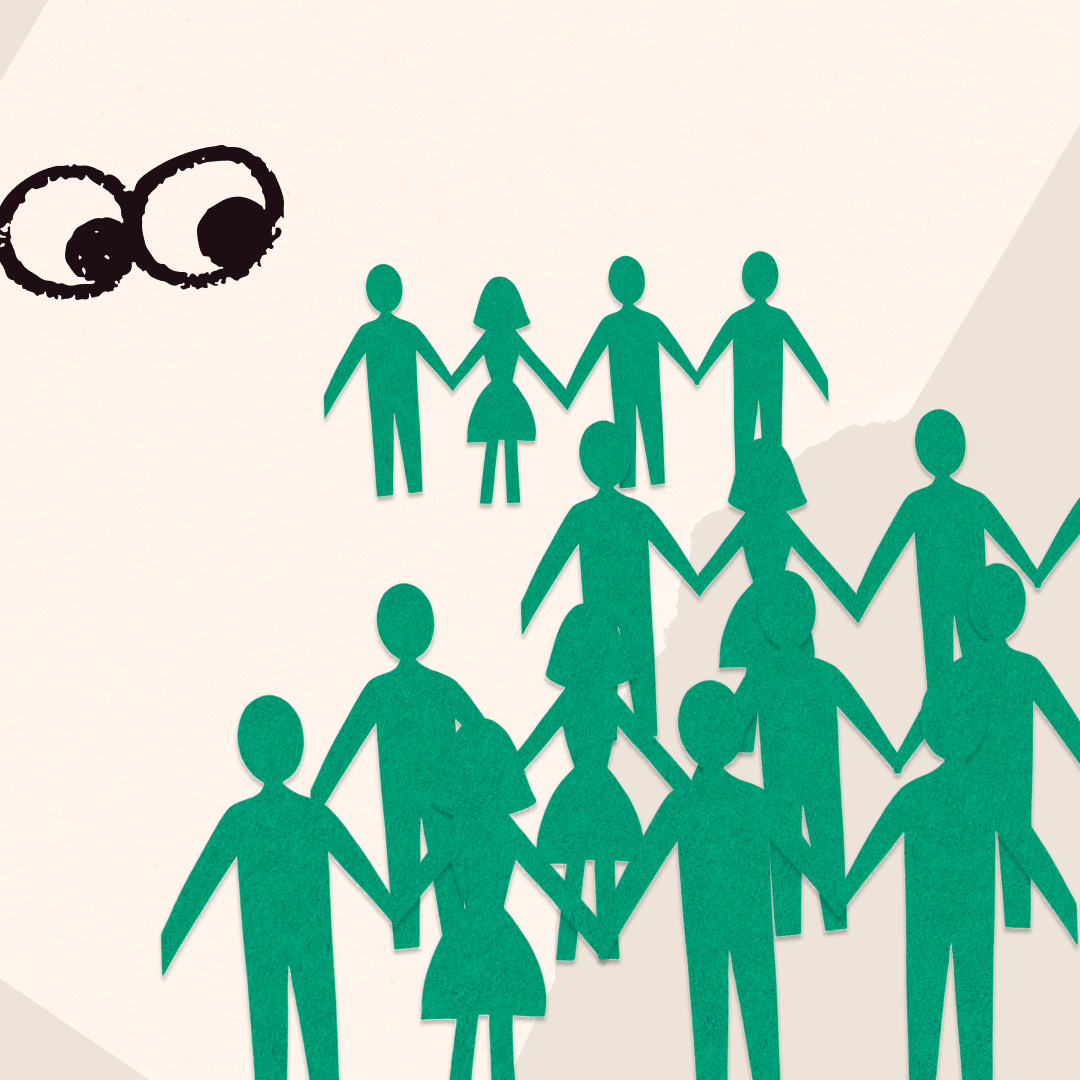
Honestly, I could have cried. That sounds like a dramatic reaction to a LinkedIn video of a guy quoting a comedian, but it just perfectly skewered something that has been really getting me down lately, which is that I know our people—Bonfire people, like you!—are out there and that there are a lot of them, but we’re hidden from them. Or they’re hidden from us.
If our job is to find our people…why is it so hard right now?
When I put it like that, I realize it sounds like I believe in a personal conspiracy against our little company, but that’s not it at all. What I mean is that the most obvious channel for discoverability in 2026—aka the internet—has become a maze of pay-to-play gates designed to maximize profit for the gatekeepers and ensure that the barrier to entry can’t be surmounted through effort, quality, or value alone. Now, you also need cold hard cash.
You don’t have enough money to pay to open the gates, or money to pay someone else to dabble in the arcane and shifting arts of razzle-dazzling the gates open? Then you forfeit the ability to find customers, community, and connection.
This wasn’t something that happened overnight, but now, it feels overt and obvious that the market is no longer optimized to connect people to each other and/or the ideas, products, or services they’re looking for. It’s optimized to extract maximum value from the attempt to connect.
Sam Ogborn surfaces great examples of this in her latest video and Substack. It’s not enough to make a good product that millions of people are excited to pay for; today’s corporate ideals dictate that you have to get people addicted to the product, or you have to suck up all your competitors to have a monopoly on the product, and then you must squeeze your customers to the painful edge of their willingness to pay in order to earn a pat on the head from your shareholders or board or VC firm to prove you’re being as sadistic as the market will tolerate. (See also: enshittification.)
A lot of people will say, “Well, that’s capitalism. That’s just good business. Are these companies supposed to provide you all these services—search, social media, hosting—for free?”
No. No one is asking for free.
But ‘good business’ isn’t creating a system so extractive and unstable that it lasts only long enough to make relatively few people very rich—or just richer—before the pressure it exerts on the folks propping it up collapses it. Or just makes the business vulnerable to the next disruptor who gets the cRaZy idea to just make a solid product that’s priced fairly. (Though good luck to them getting the word out!)
I mean, I’m 38 years old, and the internet as we know it was invented in my lifetime. Like damn, did we get here quickly!
I’m being quite general, so let’s dig in to what I mean exactly:
1. Social media: Algorithmic throttling and paid amplification
The myth of meritocracy is alive and well on social networks. It used to be true that you could just kinda be yourself (or your company’s self) and the people who needed what you did could find you—in other words, there was a mechanism called organic reach. (‘Organic’ meaning you didn’t pay for it, and ‘reach’ meaning it found the eyeballs of new and/or relevant folks.)
But organic reach is in decline across platforms. And it didn’t just decline organically! It was intentionally deprioritized as platforms matured their ad businesses.
Facebook publicly acknowledged major feed changes in 2018 to prioritize “meaningful interactions,” which reduced reach for brands and creators publishing on their platform. According to a more recent study from Hootsuite:
Back in 2012, Facebook’s average organic reach was at a healthy 16%. In 2025, it hovered between 1–2%. Instagram’s organic reach also dropped 12% from 2024 to 2025, and LinkedIn saw an even more dramatic 34% slide.
Keep in mind, that percentage isn’t calculating 1-2% of the market or your potential customers; that’s 1-2% of people who have already chosen to follow you. This is a deliberate structure change, platforms optimizing for time-on-platform (addictive mechanisms) and ad revenue (just give us money or else), not relevance or creator–audience matching. The result is that you can have the right audience and still not reach them without paying.
2. Search, SEO, and LLMO: From “effort moat” to “capital + scale moat”
SEO used to be the “earn it with effort” channel—meaning it took consistency, volume, time, and intentional creation of relevance through keyword research.
But today, competitive keywords are dominated by “high-authority domains” (think Amazon, HubSpot, etc.) and sites with massive backlink profiles, which are often built via PR budgets and more nefarious content goosing strategies which cost money money money.
Like, please 😫: ~90% of pages get zero organic traffic from Google.
And that’s before you factor in search ads occupying top-of-results real estate, Google’s own native products (maps, shopping, etc.) and their (sometimes dangerously stupid) AI Overviews, bumping organic links down the page. Plus, there’s everybody’s favorite new layer of gatekeeping: LLMO or GEO, or manipulating how you show up in AI search results like ChatGPT and Perplexity, which people are now using instead of search.
Optimizing for those LLMs means rethinking how content is structured, where you’re mentioned, and who mentions you across the web, because models preferentially surface already well-cited sources, reinforcing existing hierarchies (and inequalities).
The best answer does not win. The best-resourced content ecosystem wins.
I’m depressed to say that we offer a playbook about running LLMO optimization if you’d like to try it for yourself. Or just get in touch and we can do it for you.
3. Marketplaces & platforms: The rent is too damn high
Sadly, it’s not just content channels. Amazon sellers increasingly rely on “sponsored listings” to rank products highly in customer search results. Etsy prioritizes paid/boosted listings, too. You’ve probably noticed the same pattern on food delivery sites, eBay, and clothing resellers like Vinted.
We’ve experienced the same thing attempting to sell our retreats on aggregator sites: not only do we have to spend a long time formatting our listings to their specific site requirements, but we also agree to give up 15-20% of the retreat fee just to be listed, and 25-30% if we’d like to be preferentially listed instead of just buried on page 18 of the search results. (This is anecdotal, but we’ve never paid the extra and we’ve never had even a single inquiry from any of these sites.)
“Open marketplaces” are actually dungeons with limited spots to rent in the castle above—and at a premium at that.
The 4 phases of The Great Gating
Like I said, this isn’t a new idea—people like Cory Doctorow and Ben Thompson have written about how platforms “decay” over time—but what feels new is how systematically every channel is becoming gated in the same shitty way.
And it seems to follow this pattern of phases:
Openness: Brands and creators win with creativity, effort, consistency, quality.
Optimization: Platforms gobble up data to figure out what “works” and in what ways user behavior is exploitable.
Monetization: Platforms introduce paid amplification, upgrades, and premium experiences.
Enclosure & Extraction: Reach is throttled, black-box algorithms dictate visibility and engagement, leaving brands and creators reactive and scrambling, pay-to-play mechanisms dominate, and platforms “enshittify” the status quo to squeeze users to pay.
If you disagree about certain platform or channels, I’d love to know which, but it feels like we’re deep in the Enclosure & Extraction phase everywhere and there isn’t a way to clamber back out. What’s the fifth phase, even? Collapse? Disruption? Revolution? Running Away to the Wilderness? (Friends, let us pray…)
🎙️ Healthy Business Paradigms of Aliveness? What a compliment to get from The Joel Bein Show, which gave our podcast interview that glowing title. You can listen to me and Shannon tell Joel all our biggest business feelings, in a conversation that definitely felt healthy and alive. Thank you, Joel!
Ok, it all sucks. Now what?
I wish I knew.
First, I think the answer to “Now what?” is individual. And the reason it’s individual is that I think it has to do with your tolerance or even excitement for ::waves hands:: all this. There are a significant number of marketers, entrepreneurs, creators, creatives, and other folks trying to hack their way through the online jungle, and who view all this as a kind of game. Or if not a game, then at least a problem to solve. And solving problems can be very satisfying and meaningful and interesting! I can absolutely see how the shifting goalposts and neverending changes keep this aspect of your job or your creative life dynamic and interesting.
If that’s you, that’s great!
That’s not me.
My honest feeling when I think about beating the algos and winning attention and going viral and breaking through the noise is:
Holy shit, I just wanna touch grass so bad.
When I think about it, I become the total burnt-out Millennial stereotype: I want a job that doesn’t involve a screen. I want to write and make art. I want to be outside. I want to grow and cook my own food and do weird little DIY projects around the house. I want to run screaming into a massively more analog life that probably can’t bear the cost of living today.
And, right or wrong, scapegoating or not, it’s easy for me to loop back around to: “If only we could find our people and our people could find us.” Which makes me realize that actually, if the internet and social media platforms really were the democratic, connective, open marketplaces they were supposedly built to be, I wouldn’t feel so compelled to run into the countryside. I’m still giving these platforms a lot of power to shape my life, online and off.
Because the tragedy isn’t that the internet is crowded, but that it’s filtered—by systems that are financially incentivized to not show you your people unless someone pays for the privilege.
I’m proud of the brand strategy work we do with Bonfire—and it’s our bread and butter. I’m scared of investing more in the work we really want to do with Bonfire, because we need more of our people in order to really do it: that’s content, community, retreats and experiences, and eventually supporting artists and creatives with free residencies once we can afford it.
It feels like pursuing my professional goals has become not about making the best, coolest, most transformational [insert offering here] for the people who want and need it, but rather about finding ways around, over, or under gates. One of the reasons I wanted to be an entrepreneur is because I believed it gave me more control over my professional life. While that’s still largely (largely!) true, it feels like that control is being eroded away a little more every day.
Over to you…
I acknowledge this feeling is pessimistic, and my view of the landscape is incomplete. If you’ve got a glass-half-full POV on all this, I really want to hear it! Reply, comment, reach out on LinkedIn. If you do, you’re probably the people I’m looking for.
But wait! There’s more…
Wanna hang out in person?
Our next retreat in April 2026 is SOLD OUT! However, you can sign up for the mailing list to find out when the next one is happening.
Wanna work with us?
If you need help with brand strategy and storytelling, fractional brand and marketing leadership, and bringing your brand strategy to life in impactful ways, send us an email at hello@aroundthebonfire.com to get in touch.
As always, you can find us on LinkedIn, Instagram, and Threads.
I don't have the answers either but I'm right there with you and glad we at least found each other :)
Definitely resonated with this one today!