

Get (statistically) luckier
How to increase your "luck surface"

Hi there! You’re reading the Bonfire newsletter from Kevan Lee & Shannon Deep. Each week, we highlight learnings from our experience as in-house marketers turned agency owners who think a lot about creativity, our relationship to work, and how all of that impacts our identities. We’ll also feature insights from our digital community of super smart folks (which you’re welcome to join).
Wishing you a great week!
At our last retreat, one of our participants talked about his approach to making moves in his career and advancing on his personal projects. According to him, it all had to do with increasing what he called his “luck surface”—the number of opportunities he had available to him to experience luck at any given time. People nodded along enthusiastically when he said this, and I know I’m not the only one who adopted his framing that day!
Truly, I’ve been thinking about it ever since.
If we normally define luck as “random good fortune,” we can define luck surface as the target upon which that good fortune can strike. And it’s way easier for an arrow to hit a billboard than a playing card.
Tending and growing your personal “luck surface” like a garden can be a big paradigm shift, and I’ll explain how you can harness it.
Reimagining the luck narrative
We think we like the more traditional narratives about luck, because if luck = random fortuitous chance, then a good thing is just as likely to happen to us as it is to someone else! But actually, this idea is incredibly disempowering. Random fortuitous chance is still random, meaning it’s disconnected from who we are or what we do.
So yay; maybe we’ll get lucky! But boo; maybe we’ll get lucky…
The concept of creating your own luck, or luck being the “combination of preparation and opportunity,” is not exactly new. But the idea of investing in expanding your personal “luck surface” shifts all the narratives around luck, because:
It recognizes the key role that luck plays in success. It’s not an incidental shortcut; it’s a necessary ingredient. You need luck, all the time, and the larger and more unconventional the things are that you’re trying to do, the more luck you’re likely to need.
It positions luck not as something ephemeral, but as a resource you can mine. While luck isn’t within your control, per se, you can concretely increase the odds you’ll find it or it will find you. You won’t stumble across gold sitting in your living room; you have to dig. And you do control how much and where you dig!
It implies that there are many ways to get lucky. Not to be facile, but a surface is, definitionally, something shallow and broad. It’s not a “channel.” It’s not a “vector.” It’s also not an ever-deepening hole that you dig, waiting to be maximally prepared for when your luck comes along. Your luck surface is a wide, open field, meaning you can experience luck from all 360 degrees, not just the pinpoint of “right place, right time.”
Luck is important. Luck is not random. And it’s everywhere.
The different types of luck
Not that I want to make a habit of quoting VCs, but Naval Ravikant, the founder of AngelList, has broken down luck into four categories that I think are quite relevant and revealing:
Dumb luck - Random! Think: winning the lottery, finding $100 in a thrifted jacket, etc.
(Note: I’d also put all kinds of advantageous associations and privileges here, too. Like who your family is, how wealthy they are, and who they know, where you live, your native tongue, your racial or gender identity, etc.)
Luck through motion - The more times you try, the more chances you have to get lucky. Luck favors action.
Luck through awareness - This is about pattern recognition and social or situational awareness. You see things other people aren’t noticing.
Luck through reputation - On the merit of how you’re known, opportunities find you.
As you can see, only the first of Ravikant’s types is entirely out of your control. That’s great news! But it’s also important to note that even the kinds of luck you can impact are not immediate, get-lucky-quick schemes. Trying repeatedly takes time. Developing pattern recognition takes time. Building your reputation takes time.
In other words: Luck will always feel sudden, but growing your luck surface to a size that can be hit takes time!
Now, some more good news: I don’t think Ravikant’s luck types are complete.
Here are some other types of luck I’ve been noodling on that might productively shake up your definition and which you can grow over time:
Luck through exposure
Maybe related to motion/action, but exposure can mean putting yourself in as many and as varied situations as possible. Think: travel, networking, contests, putting yourself on more platforms, making new personal connections, and prioritizing new experiences.
Luck through probability
If the chances of achieving [X] without a lot of luck are discouragingly small, then what things related to [X] do you have a better probability of succeeding at? Likely, succeeding at those relevant “surer bets” will make [X] more probable over time!
Luck through reciprocity
This is my favorite, and I’m gonna spend some time here. You could also think of this as luck through generosity.
There’s a creator I like on TikTok who talks about the thrill of being someone else’s luck on a small scale—like leaving coins in the vending machine for the next person to find. But there are a lot of ways to be luck for someone else, if you’re just paying attention to all the value you have to offer!
Think about one of Ravikant’s types of luck above: luck through awareness. We might imagine that’s referring to our awareness of opportunities we can seize, but what if we were also trying to be aware of moments where we could be the luck for other people?
Maybe that’s overhearing someone at a party say they’re looking for a new dentist, and you go out of your way to recommend yours. Maybe it’s paying attention when a friend says their colleague just got relocated to Seattle, and your brother lives in Seattle, so you ask a few questions deeper than usual and discover they both play rec basketball so you put them in touch. Or a recent real example: I was leaving a foreign city I’m unlikely to return to soon with a public transit card that still had a ride or two on it. I saw a bunch of confused people trying to buy one as I arrived at the airport, so I just gave them mine.
How lucky for those folks that someone was in the right place, right time, was situationally aware, and generous with their resources! It feels great to be someone else’s luck, and while there is no guarantee that the luck will be reciprocal, you’ve still increased your luck surface, which is the whole idea of investing in all these different kinds of luck!
Want to reconnect with your innate creativity?
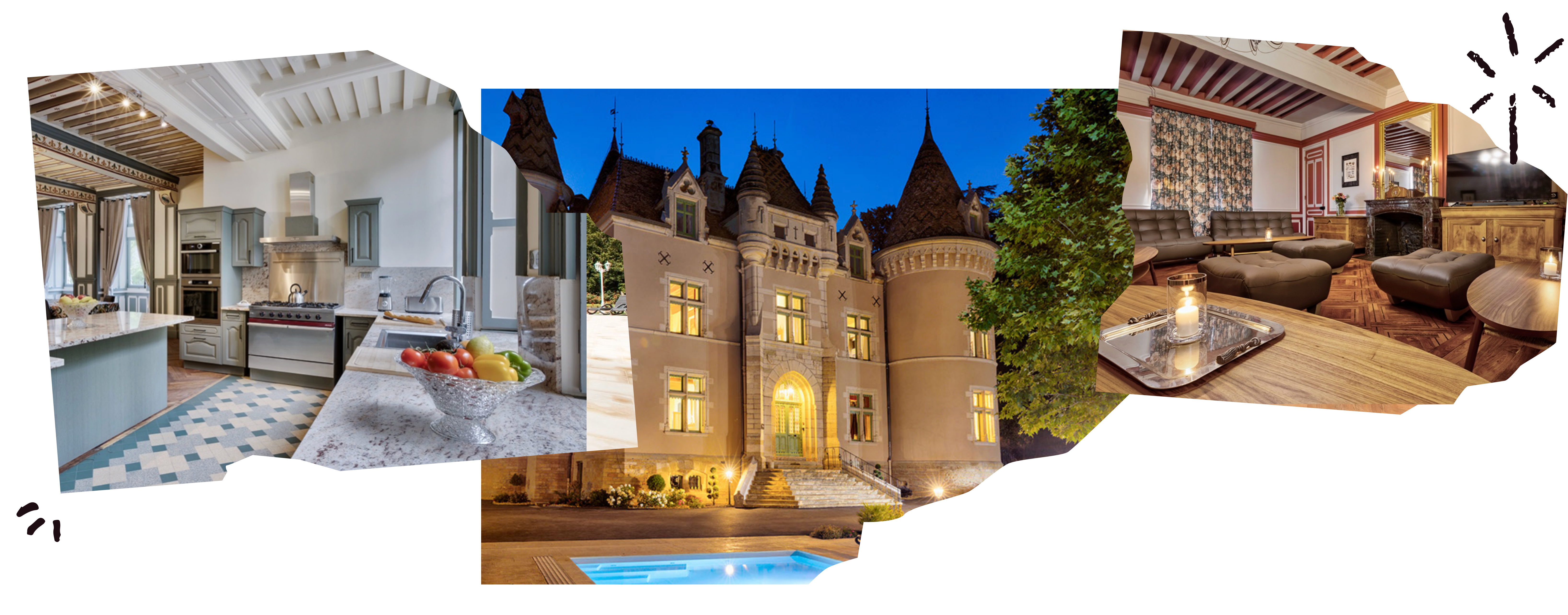
Join us in France in April for our next retreat—just 3 rooms left!
Some concrete tips for increasing your luck surface
We’ve got a handle on the different kinds of luck you can cultivate, so let’s talk about how. You probably already have some ideas just based on what might fall into each type, but here are some specific tactics to get you started:
Do things in public. Girl, we know. This one is scary and it sucks sometimes, because it opens you up to criticism, ridicule, and public failure. But it’s also the only way people and opportunities can find you! Build a platform. Post on social. Put yourself out there. Talk to people! You think your luck surface expands by fostering your secret wishes deep in the most private chamber of your heart? NO! The surface expands around you!
Ask for things explicitly. People are not mind readers. They don’t know what you want, need, wish, are striving for. Tell them (publicly)! Ask for things (specifically)! The likelihood of sushi being dropped in your lap < just ordering freaking sushi.
Go wide, not just deep. Invest in skills, experiences, and connections adjacent to where you want to succeed, not just your interest. These oblique connections unfurl your luck surface across new territory.
Leave space for serendipity. If you only do the same things all the time, or you plan everything ahead, luck doesn’t even have room to find you. You have to leave room for chance encounters, unexpected turns, and spontaneous ideas.
Collect rejections. You might have heard of people making it their goal to get rejected 100 times in a year, or at least once a week, stuff like that. Not only is this great desensitization training for rejection, but it also shows you that some of the time, you’re the one saying no to you first by not even trying!
Document your lucky conditions. You wanna juice your pattern recognition and situational awareness to get better at identifying luck? Try keeping a “luck journal” for a bit and seeing if you can pull out common threads. Maybe you’ll notice that it’s something as simple being very present whenever you get lucky, or maybe it’s always when you step out of your comfort zone socially or try a new thing. Whatever it is, once you recognize it, you can replicate it.
Remember: Luck isn’t magic; it’s chance. (And chance is just math or something, but please don’t ask me about that.)
If you switch your mindset from “I hope I get lucky!” to “I’m increasing my luck surface!” you’ll be less frustrated when the luck doesn’t hit, maintaining your motivation to keep being the luck you wish to see in the world.
But wait! There’s more…
Wanna hang out in person?
New retreat dates are up! Head to our experiences page to join our next one in April 2026.
Wanna work with us?
If you need help with brand strategy and storytelling, fractional brand and marketing leadership, and bringing your brand strategy to life in impactful ways, send us an email at hello@aroundthebonfire.com to get in touch.
As always, you can find us on LinkedIn, Instagram, and Threads.

I love so much of this as qualifying "luck" is really, really hard (and any definition usually feels incomplete), but, these weren't bad.
I think the hardest thing about "making luck" is that it requires humility and courage, both/and and either/or I suppose, but, must-have elements since getting punched in the face 100 times requires a different mindset entirely.
Learning anything new is hard. Going deep and wide and out of your comfort zone? Hard. Doing it all publily? Hard. Collecting rejections? Who wants to naturally do that?
But, it's all so true.