


Hi there! You’re reading the Bonfire newsletter from Kevan Lee & Shannon Deep. Each week, we highlight brand, marketing, and creative learnings from our experience as in-house marketers turned agency owners who think a lot about creativity, our relationship to work, and how all of that impacts our identities. We’ll also feature insights from our digital community of super smart folks (which you’re welcome to join).
Wishing you a great week!
Best Books of 2025
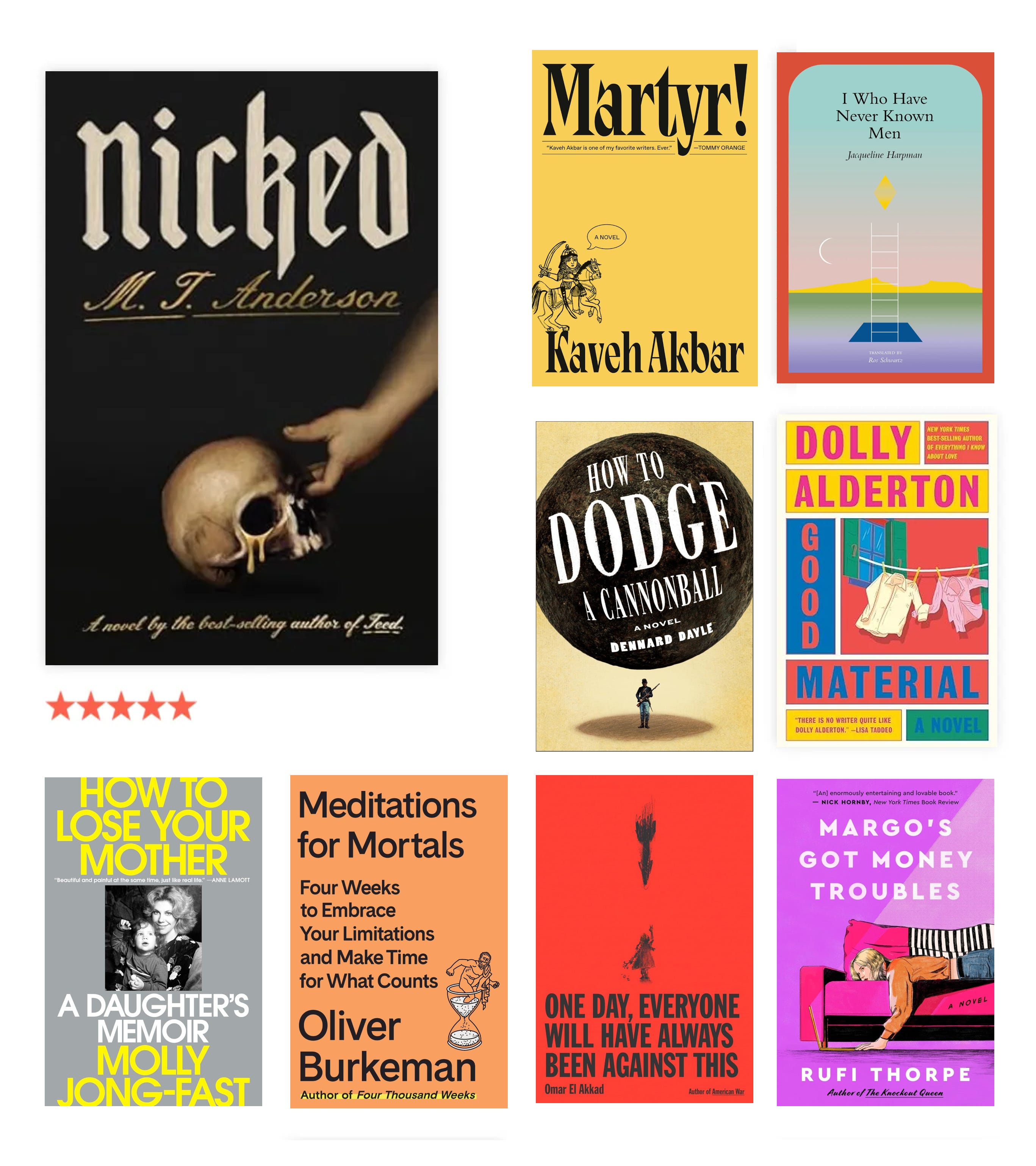
In what has become a favorite yearly tradition on this substack, here are our favorite books from the past 12 months, ranked and recapped and linked for your book-reading pleasure.
For the past six years, Kevan has shared a list of all the favorite books he’s read—an eclectic mix of genres, authors, topics, new releases, old classics, etc. To check out some of the past lists of favorite books, here are the lists for 2024, 2023, 2022, and 2021. (The archive goes even deeper if you want to search in Substack.)
This year, we’re doing a collab with a total of 15 great books worth checking out.
We love stories. We read a LOT (an average of a book per week or more). We read widely and with a lot of curiosity. We can’t imagine you’ll find too many book lists like this one.
What books did you love this year?
Let us know in the comments or replies. We’d love to add to our reading list!
Kevan’s favorite books of 2025

Nicked by M.T. Anderson
One of the first books I read in 2026, and I never forgot it!
NickedI is historical fiction about a monk on a treasure hunt. It’s the year 1087, and the monk in question is sent as an envoy on a quest with real treasure hunters to recover the bones of a saint. It’s one of those books where you just can’t wait for them to make a movie out of it, and the monk, Nicepherous, is one of those characters you can’t help but root for throughout. He may be the most tenderhearted character you’ll ever meet, and his tenderness is put to good effect in the raucous, entertaining plot.

Meditations for Mortals by Oliver Burkman
Beyond the mountains, more mountains.
~ Haitian proverb
Oliver Burkeman is like if James Clear and Marcus Aurelius had a baby. Oliver’s latest book is a collection of observations and perspectives inspired by a life of meditation. You’ll probably recognize bits from the Slow movement (Slow Food, Slow Internet, etc.), stoicism, and mindfulness. I felt at times existentially challenged and neurotically soothed, often in the same chapter. Overall, though, it was my most-highlighted book of the year, which tells you just how much its lessons on acceptance, peace, control, and patience really hit home.
Oliver also wrote Four Thousand Weeks, a book about time management for our very, extremely, cosmically fleeting lives.

Searches: Selfhood in the Digital Age by Vauhini Vara
There’s this sense you convey, through the rhetoric you use, that we should trust you. It’s not just the inclusive language we talked about–including the fact that you keep saying, literally, that you’re here to help. It’s also the authoritative language (the near-perfect grammar, the well-organized lists) and the flattery (praising our writing and our arguments).
The above quote is from a conversation that Vauhini Vara had with an AI chatbot; in the conversations, Vauhini is telling the AI why she found its diction so trustworthy. and I realized, oops, I also convey trustworthiness in the same way.
The book is rife with acute observations like this, connecting our very human lives to the inhuman technologies that are more and more present. There’s an entire chapter about AI image creation. Multiple chapters about tech billionaires. And a really beautiful section about grief and loss, all told with our hyper-technological age in the background.

One Day, Everyone Will Have Always Been Against This by Omar El Akkad
The starting point of history can always be shifted, such that one side is always instigating, the other always justified in response.
The book title is based on a viral tweet of the Omar El Akkad’s, back in 2023 during a particularly intense moment of conflict between Israel and Palestine. The entire book, then, is that tweet enhanced into hundreds of pages in which Omar states a passionate case for why “conflict” is putting it way too mildly; it’s a war, a genocide, and an atrocity.
What I found particularly gripping about Omar’s narrative is his unpacking of the role that journalism plays in how our world gets shaped. I don’t know that I’ve ever nodded along so enthusiastically to someone’s take on disincentivized media outlets, biased reporting, and the systems that create the status quo. I was a high school sports reporter, so I was literal and figurates MILES away from the war reporting he describes. But as a journalism fanatic, I found it fascinating.

How to Lose Your Mother by Molly Jong-Fast
I want to tell the whole story not for any kind of pity, but for the hope that telling it will make me stop trying to relive it, will make my past go away.
Even though I have spent my entire adulthood creating a different kind of life for myself, my head, my soul, my spirit – whatever you want to call it – is still stuck in the mire of my childhood.
Molly Jong-Fast is the daughter of Erica Jong, a novelist famous for writing Fear of Flying and a mini-celebrity in the 1970s and 80s. I’d never heard of Erica, but I did hear a podcast featuring Molly, picked up this book, and loved it.
I’m a sucker for memoirs by self-aware people, especially when they’re navigating things in life that I have experienced. I’ve yet to lose my mother, but I have lost my dad, and it was—this might sound weird—a bit of a comfort to hear Molly’s journey.

Margot’s Got Money Troubles by Rufi Thorpe
“You think it will wreck my life?” I asked. She stroked my hair. “Yes, Noodle, it will ruin your life, for sure. But sometimes ruining your life is the only thing you want.”
Soon to be an Apple TV+ show, starring Elle Fanning and Ron Swanson!
#notanad (Although wouldn’t that be cool if Apple TV sponsored this newsletter.)

How to Dodge a Cannonball by Dennard Dayle
“Anders.”
“Yeah?”
“You talk a lot.”
“I do, sir. Unless freshly traumatized.”
Tbh, this whole book is rather a trauma for the main character, Anders, who is dodging cannonballs and other Civil War-era chicanery for the entire book. It’s an entertaining, lighthearted form of trauma, though. Turn-of-the-century historical fiction, especially from the Wild West, is an instant add-to-shelf for me, and this was the best one I read this year.
(Content warning: It does contain slang that was used in that era, which had me speed-reading portions. Just fyi.)
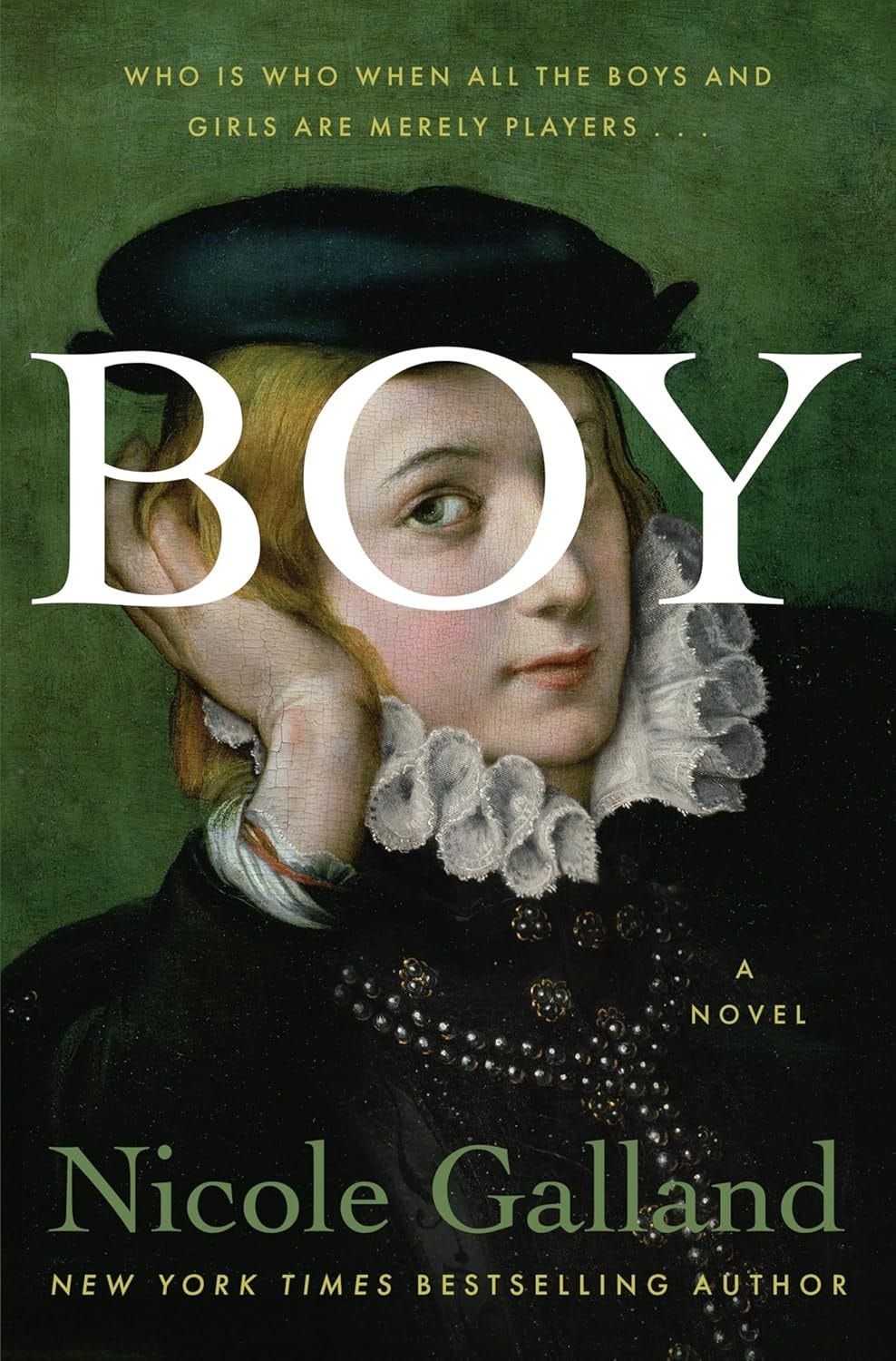
Boy by Nicole Galland
“I’m glad you were out here as I was walking by,” he said. “It’s my favorite thing about today. And it’s been a good day.”
There’s a really sweet love story at the heart of Boy, which takes place in Shakespearean England and features two young stage actors, a boy and a girl, navigating the weird gender politics of the 1500s. The boy is a famous actor, playing women’s roles on stage and granting him access to sophisticated inner circles of English high society, where he is utterly inept save for the coaching of his friend, the girl, who is not allowed into these conversations because she is lower class and, critically, a girl. Oof.
It should be noted that I stopped reading this book 3/4 of the way through at the end of a very fulfilling section because, you know, I was just so tickled at where the book ended up and I didn’t want the final act to ruin the vibes.
Shannon’s favorite books of 2025
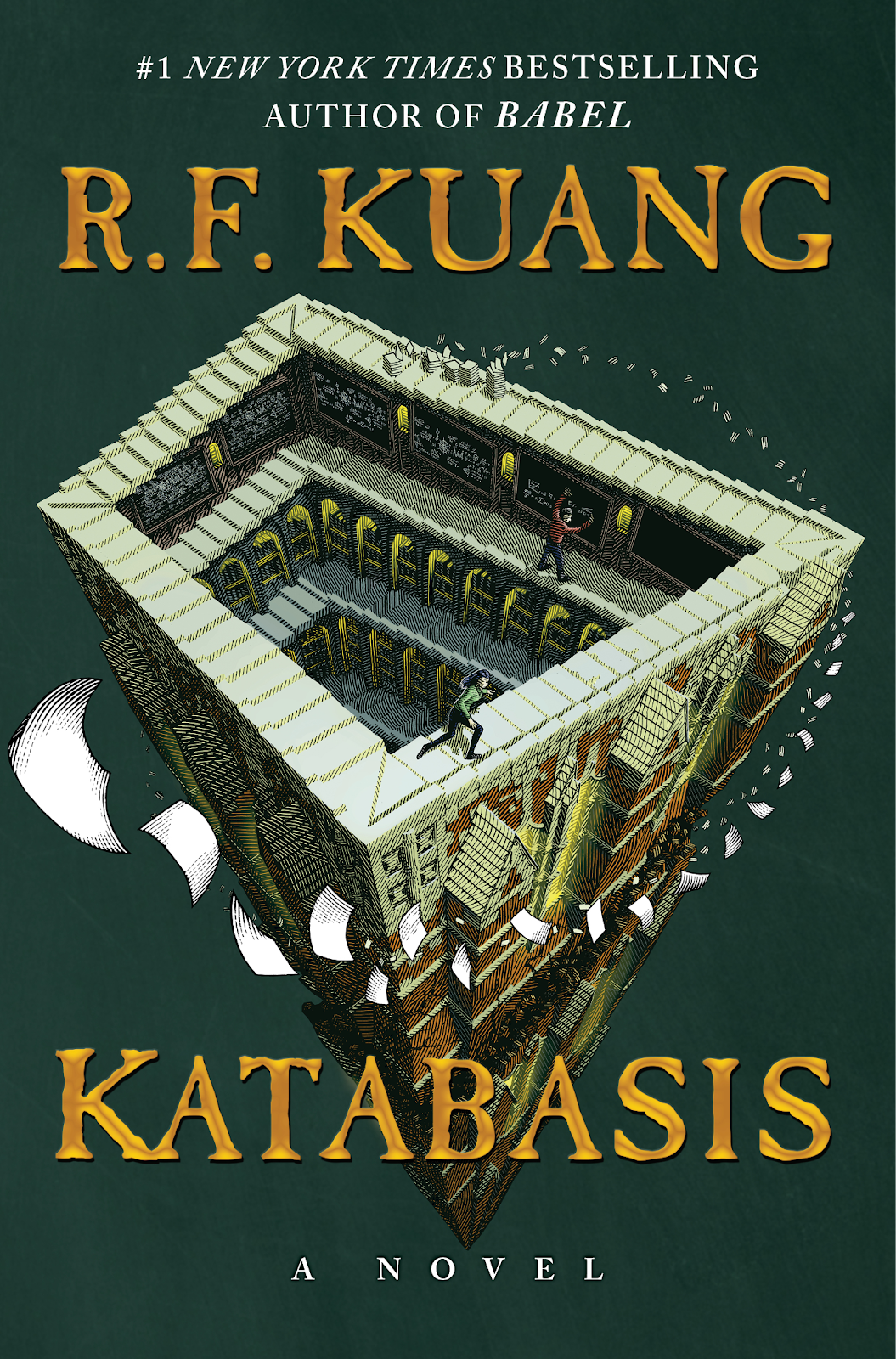
Katabasis by R.F. Kuang
“All ghost stories were wrong; hauntings were so rarely malicious. The dead only wanted to feel included.”
I know folks have been excited about R.F. Kuang for a while, but this was the first of hers I picked up, and I’ll definitely be reading more!
Here’s the concept, which I promise isn’t a spoiler because it’s laid out on the first page: A woman’s PhD advisor dies in an “analytical magick” accident, so she decides to literally go to Hell to retrieve him as that’s the only way to protect her career ambitions. It’s a smart allegory for the abuses of the academy, chock full of philosophy, a surprising amount of humor, satisfying speculative/fantasy elements, and beautiful imagery. Inventive and addictive!
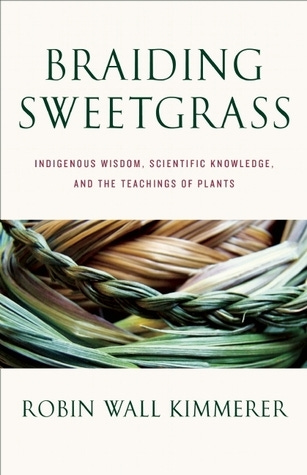
Braiding Sweetgrass by Robin Wall Kimmerer
“In a consumer society, contentment is a radical proposition. Recognizing abundance rather than scarcity undermines an economy that thrives by creating unmet desires. Gratitude cultivates an ethic of fullness, but the economy needs emptiness.”
I finally read Braiding Sweetgrass this year, botanist Kimmerer’s love letter to the natural world by reminding us of the indigenous wisdom Western society has worked hard to erase. But “love letter” isn’t quite accurate, as it implies an object of love rather than a merging of subjects through love, which is really what Kimmerer is saying on every leisurely and thoughtful page of this book. We are the Earth, and the Earth is us—how could it ever be otherwise?
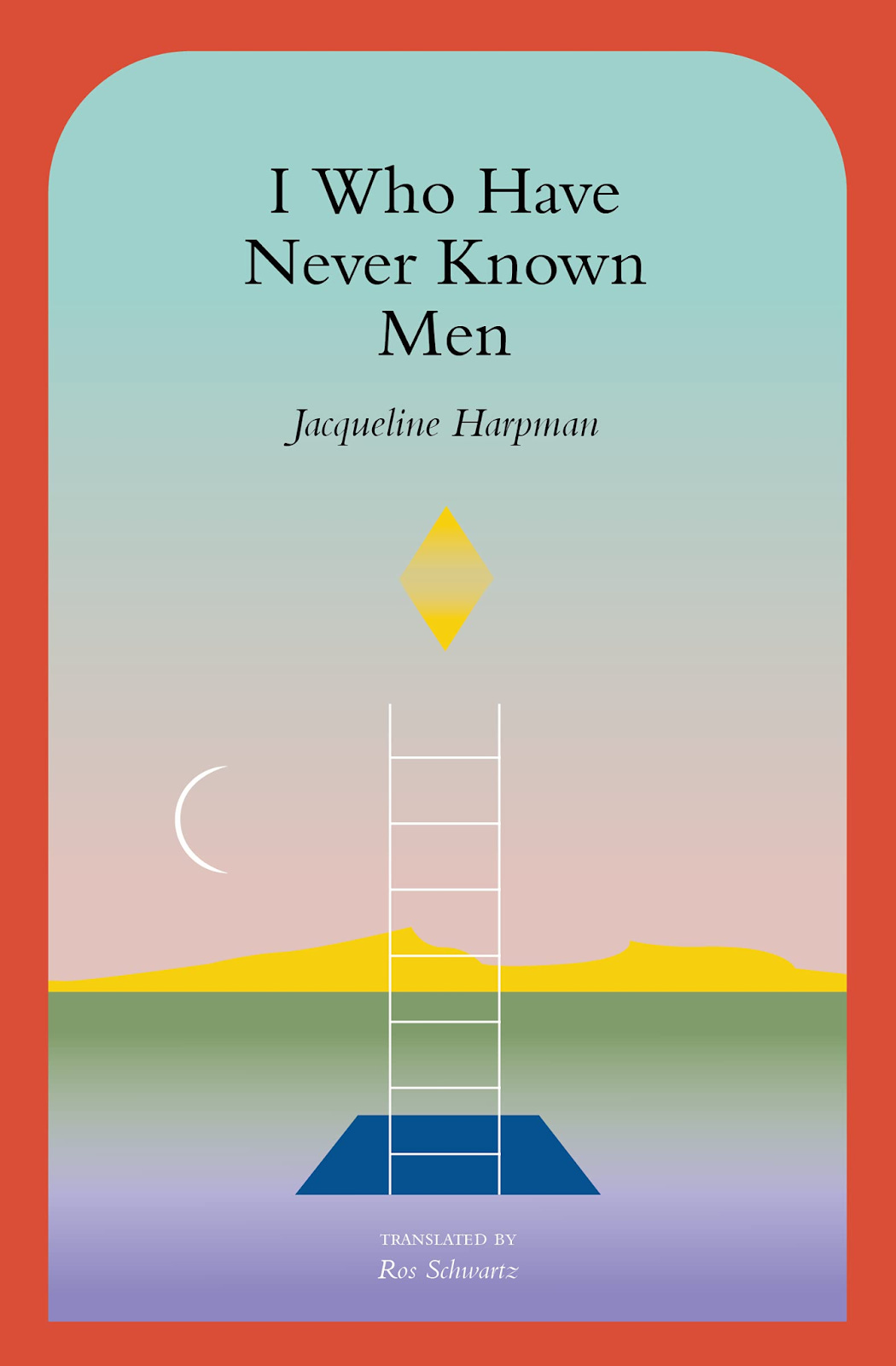
I Who Have Never Known Men by Jacqueline Harpman
Translated by Ros Schwartz
“Is there satisfaction in the effort of remembering that provides its own nourishment, and is what one recollects less important than the act of remembering?”
When a group of women emerges after years in an underground bunker with no memory of how they got there, an entire empty (alien?) world awaits them.
Now what?
As this list is revealing, I love me some speculative fiction. Narrow and disquieting, this book has a startlingly contemporary feel when you realize it was written in the 60s. It’s a quick read that will haunt you just a little!
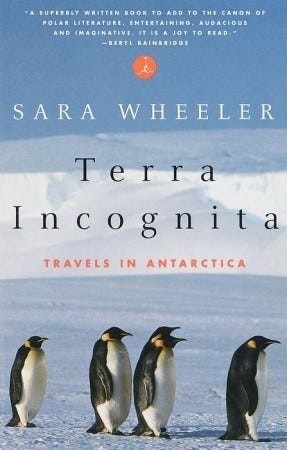
Terra Incognita: Travels in Antarctica by Sara Wheeler
“As far as I was aware, [Antarctica] was a testing ground for men with frozen beards to see how dead they could get.”
Wheeler’s prose is somehow both dense and funny, cram-jammed with esoteric vocabulary that she tosses off lightly while completely suffused with personality. I’m making my way through her whole oeuvre, and if you like witty, well-researched travel writing and somehow (like me) hadn’t yet read her, you’ll love reading about her whim-forward ramblings on the world’s only unpopulated continent.
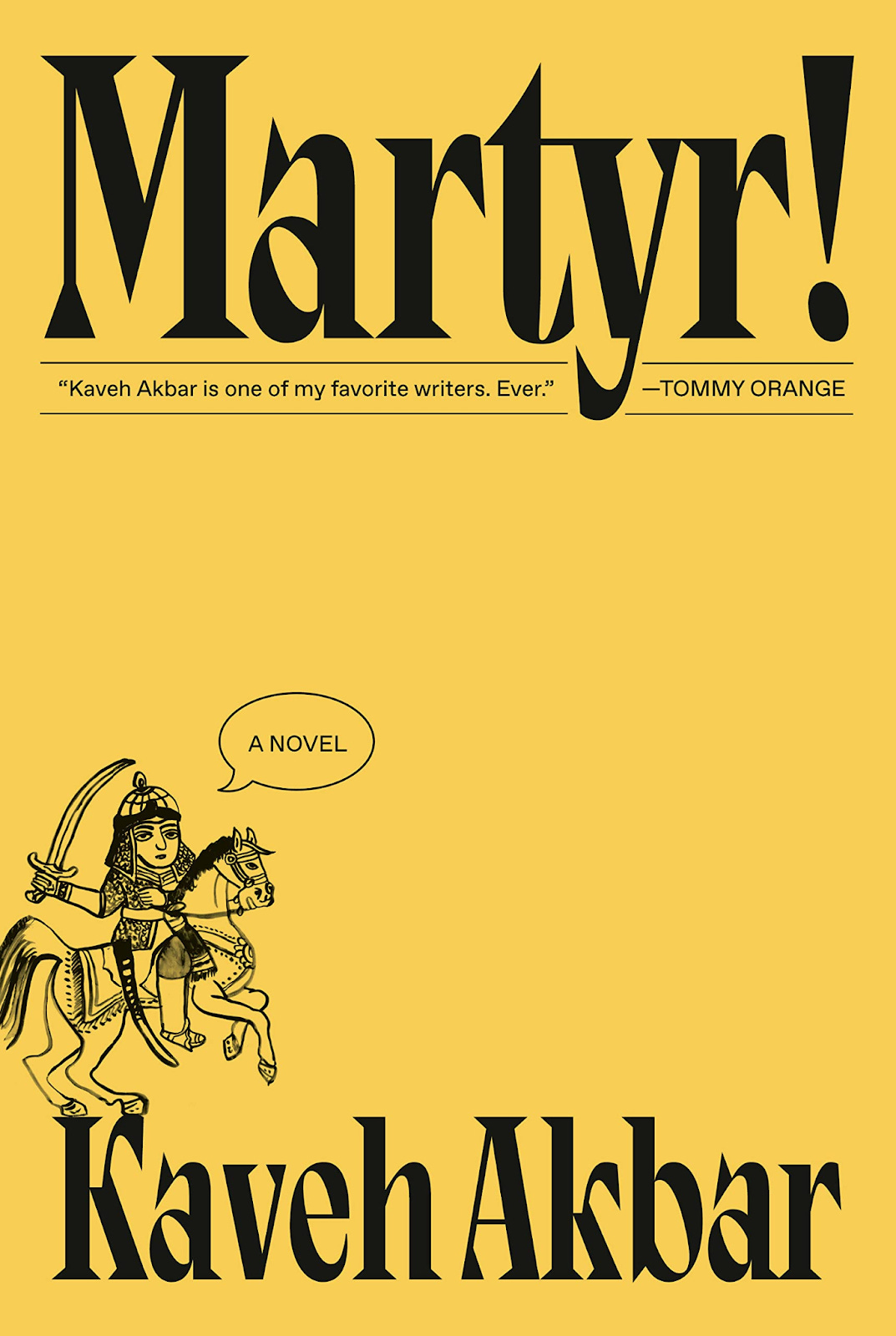
Martyr! by Kaveh Akbar
“‘There’s no difference to the outside world between a good guy and a bad guy behaving like a good guy. In fact, I think God loves that second guy a little more.’”
There is a micro-story in this book that I will never get out of my head, I don’t think. And like so much of this book, that part smears together fact, faith, and fiction. Cyrus, newly sober, is the orphaned son of Iranian immigrants. Hardly knowing why—let’s call it faith—he seeks out a terminally ill Iranian painter at her exhibit at the Brooklyn museum, and uncovers family secrets along the way. Part dream, part meditation, part poetry (which Akbar is also known for!).
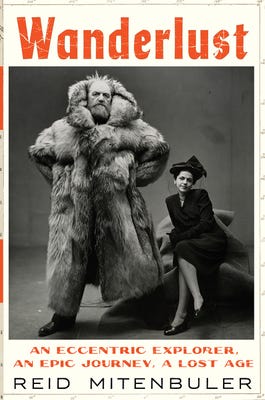
Wanderlust by Reid Mitenbuler
“‘When you stop to consider it, it is amazing how little one year matters.’”
I am decidedly not a biography girlie, but maybe that’s just because you don’t find too many gregarious, loveable weirdos like Peter Freuchen in the annals of history. Freuchen, a Danish Arctic explorer from the early 20th century, Nazi resistance fighter, Hollywood screenwriter, adventure novelist, and eventual American gameshow contestant, was a larger-than-life figure—and not just in the literal manner you can see on the cover of this book. Mitenbuler brings Freuchen’s sparkling personality to life, taking us on a survey of the explorer’s life, in which he seems to have lived ten different lifetimes.
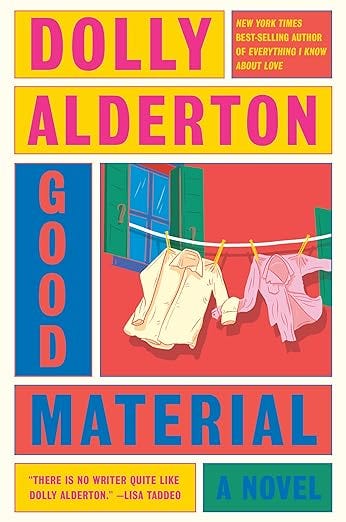
Good Material by Dolly Alderton
“‘You don’t let go once. That’s your first mistake. You say goodbye over a lifetime. You might not have thought about her for ten years, then you’ll hear a song or you’ll walk past somewhere you once went together—something will come to the surface that you’d totally forgotten about. And you say another goodbye. You have to be prepared to let go and let go and let go a thousand times.’”
Despite the pull quote I chose for this book, it’s honestly hilarious. Floundering standup comic Andy just got left by the love of his life, Jen, and he can’t understand why. So he’s trying to find out, while mostly torturing himself and making everything worse in the process. Until we find out maybe it’s quite obvious why Jen left Andy, at least to everyone but him. A truly funny, very clever, and introspective rom-com without the rom.
Upcoming Campout events

Join Campout’s 3-month challenge to find your values, your vision, and your people for 2026.
Tired of resolutions that fizzle by February?
Start 2026 with intention.
Join us four our 3-month challenge, Start With Intention.
You’ll get:
3 live workshops (Jan–Mar) + anytime replays
A private channel to connect and keep momentum
Async prompts + resources for deeper reflection
Full access to Campout’s community, library, and tools throughout the challenge
Full details are available in Campout. We’d love to see you there!
But wait! There’s more…
Wanna hang out in person?
New retreat dates are coming soon. You can join the waitlist for our next one, coming spring of 2026.
Wanna be friends?
If you love this newsletter and wish it were more interactive, you’re in luck! Join us over in Campout, our digital community for creative marketers and the creative curious.
Wanna work with us?
If you need help with brand strategy and storytelling, fractional brand and marketing leadership, and bringing your brand strategy to life in impactful ways, send us an email at hello@aroundthebonfire.com to get in touch.
As always, you can find us on LinkedIn, Instagram, and Threads.
This article arrives at the perfect moment, as I was just contemplating how to expand my reading horizons beyond AI-related non-fiction. How do you consistently unearth such unique and thought-provoking reads your curatorial skill is truly something I admire.
Added a bunch to my list!